Washington Artillery Uniforms
Notice: Some of the images
(all credited) on this page are of artifacts
from the collection of Confederate Memorial Hall Museum in
New Orleans.
They cannot be reproduced in
any form without permission from the museum.
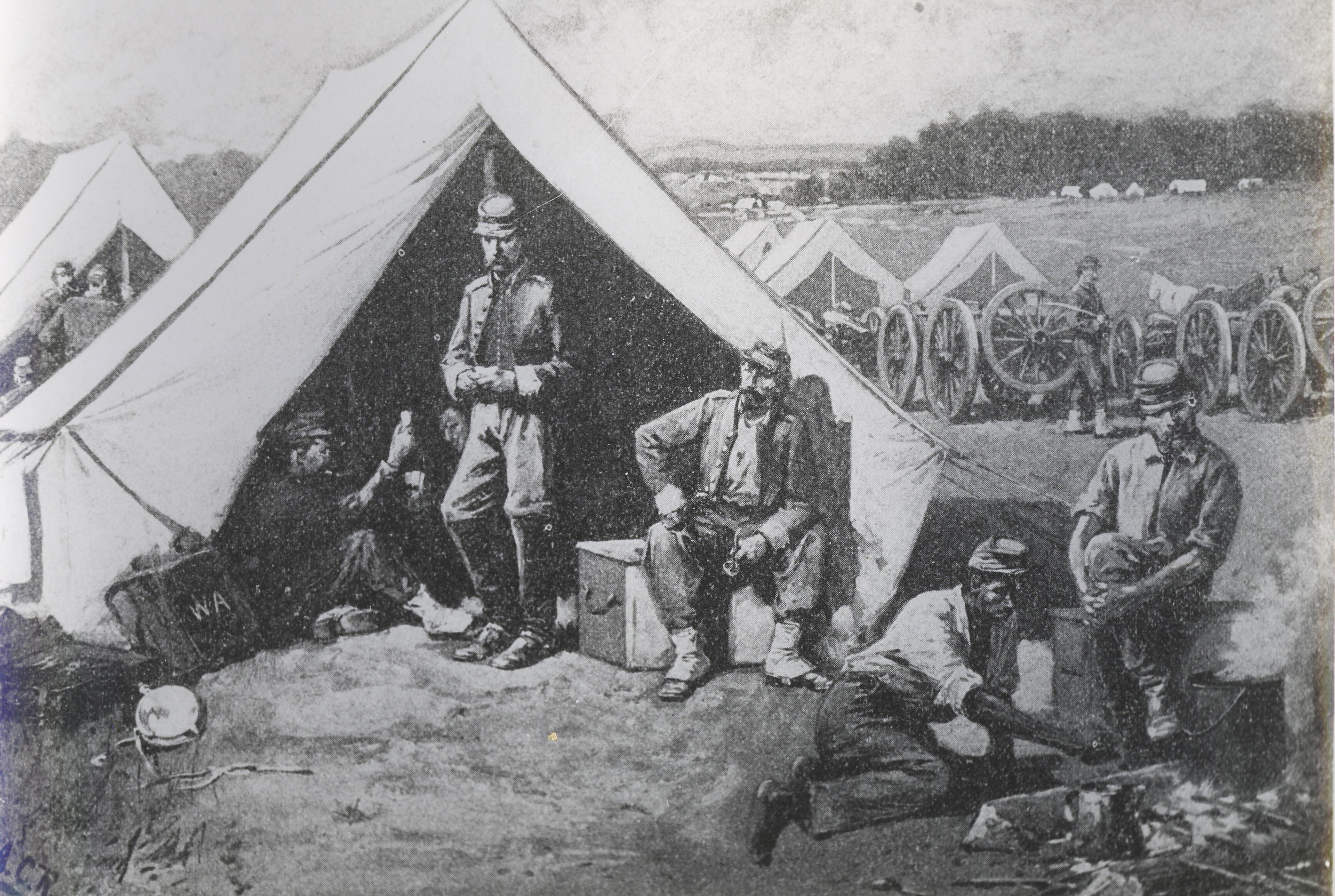
In Camp & Battle with the Washington Artillery
Mexican War Era 1840s
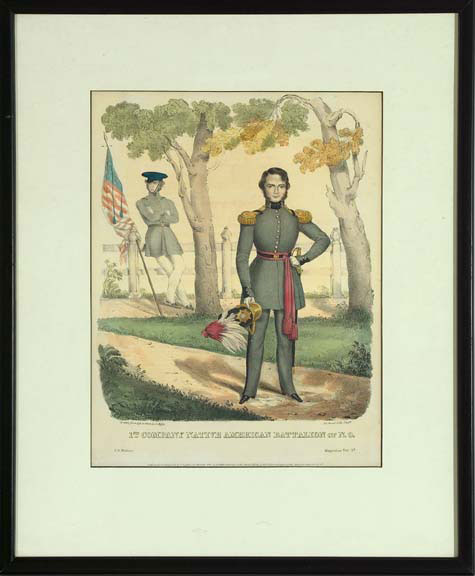
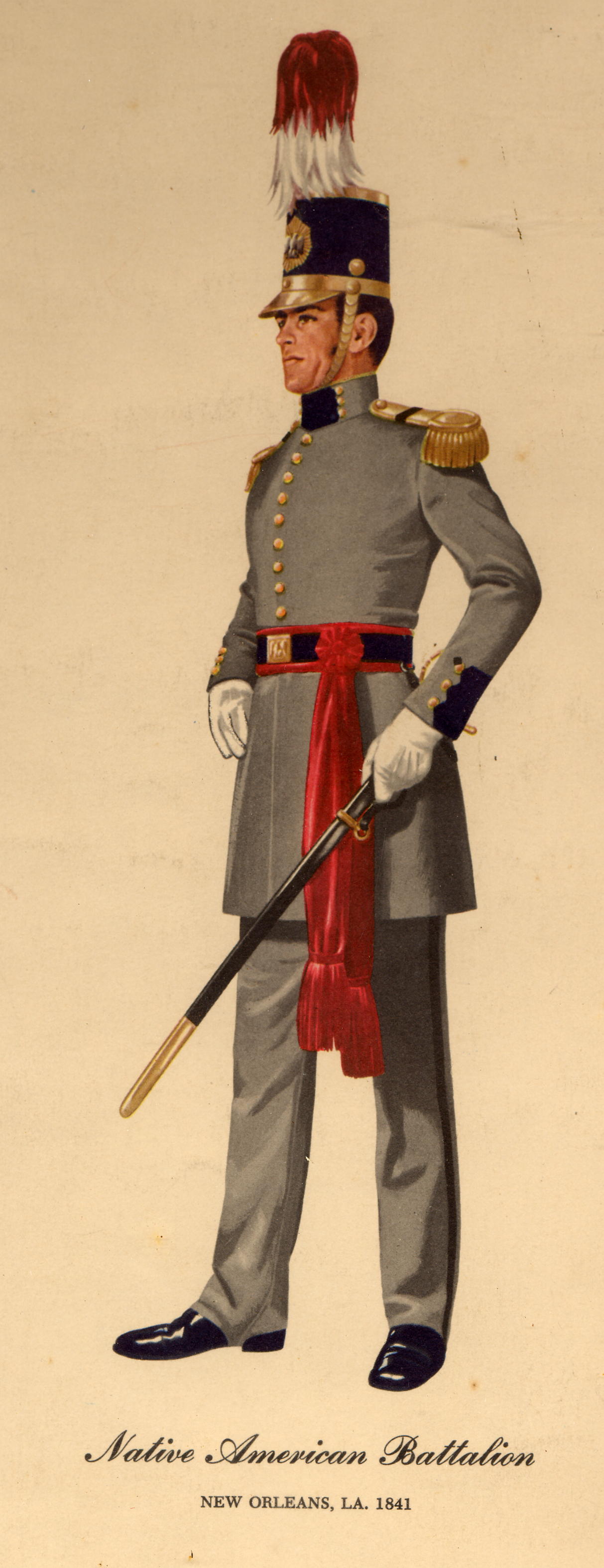
First Company, Native American Artillery
circa 1840s
The shako appears to be a US militia shako
style first used during the early1830s & carried into the 40s.
(Their sky blue uniforms earned them the
nickname "Bluebirds.")
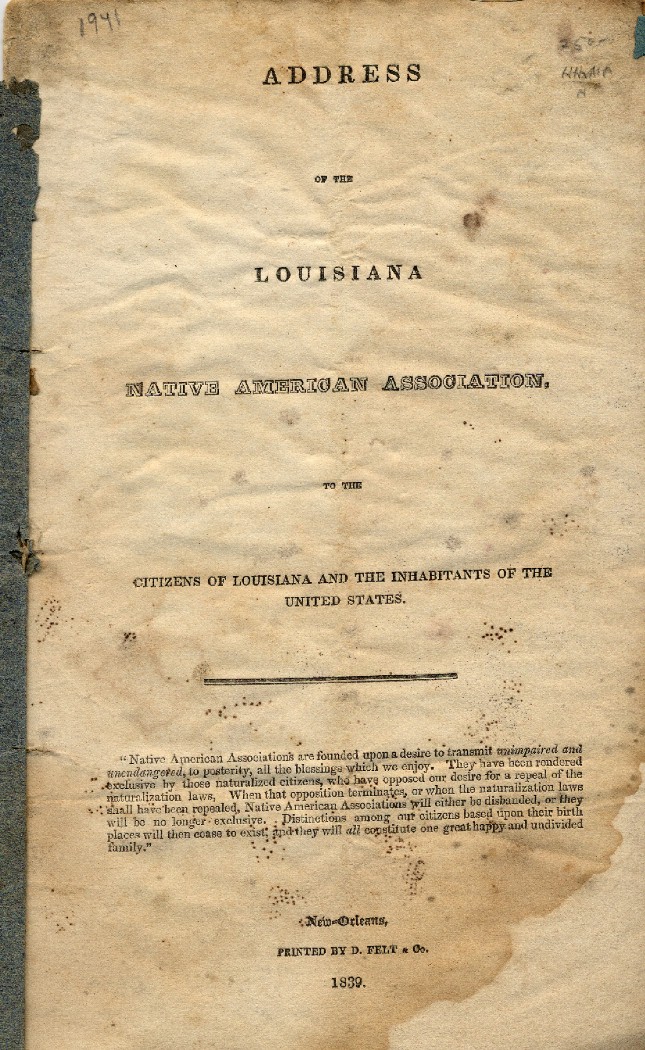
Rare 1839 booklet entitled Address of the
Louisiana Native American Association
in which James B. Walton is listed as one of
its members.
Antebellum Uniform 1850s
Being a local militia, the Washington
Artillery could choose whatever style uniform it desired. It chose to pattern
its uniform after the French. After all, New Orleans had a strong
French ancestry, and there was a certain amount of "romance" associated with
both that European country and its military look. Napoleonic appeal was still
strong.
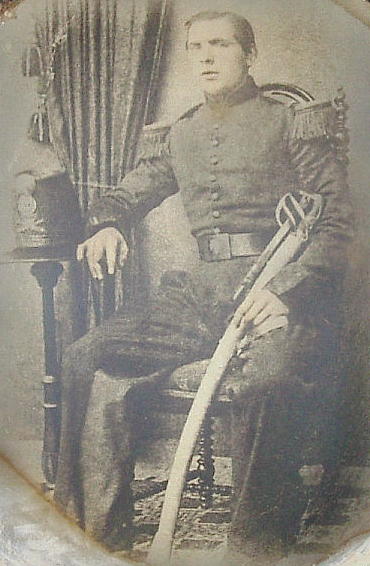
French artillery officer circa 1850s
(notice shako headwear on table)
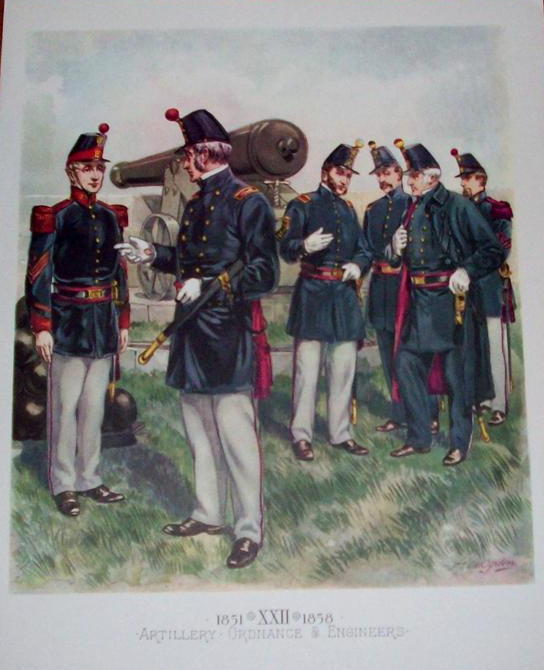
US Artillery M1854 uniform
(lithograph by H. A. Ogden)
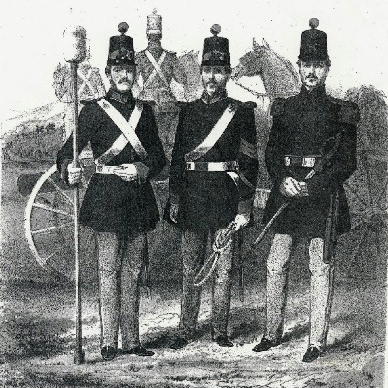
Washington Artillery officers circa 1850s
wearing their US Model 1854 Light Artillery
Shakos
(from a lithograph on an 1850s sheet music)
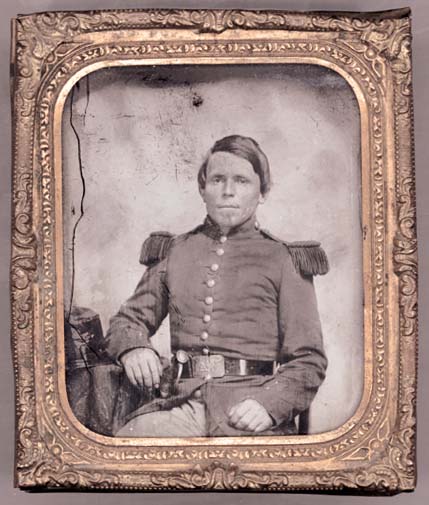
Washington Artillerist circa 1850s
His fancy epaulette style with "bullion"
reflects his status as an officer.
(Enlisted men wore only solid brass
epaulettes. See hand-tinted albumen images below.)
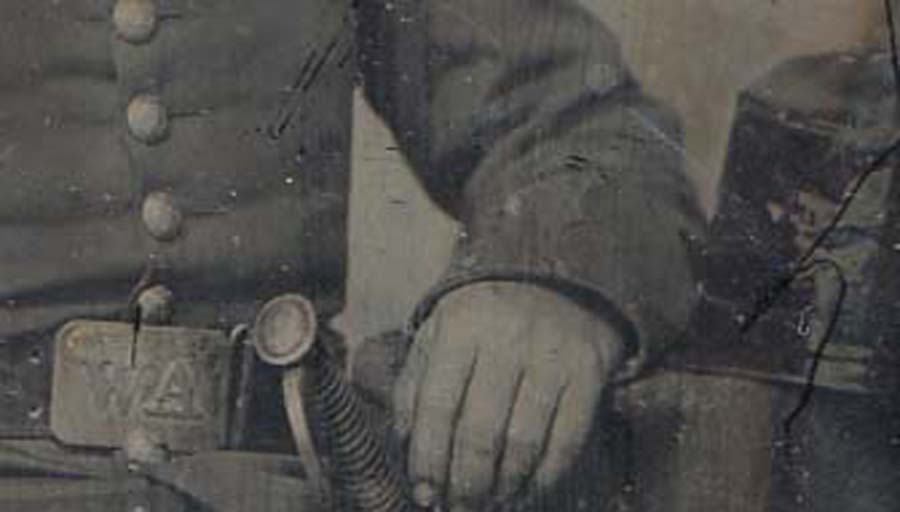
Notice WA buckle, artillery saber, and shako hat
Washington Artillery Officer's Uniforms
Antebellum 1858-1861
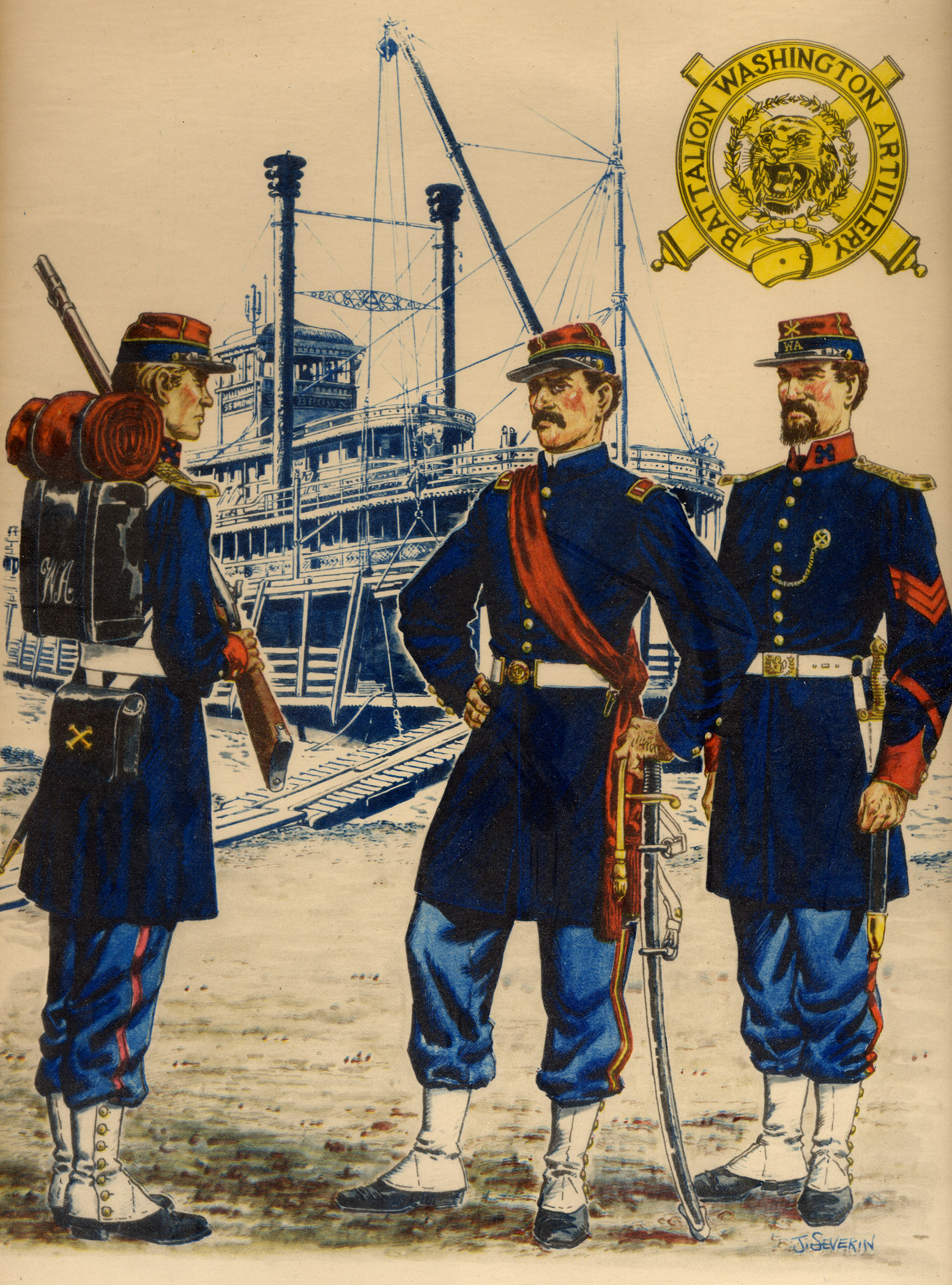
Washington Artillery "dress" uniforms consisted of dark blue
frock coats , royal blue or sky blue pants with a wide red stripe down its outer
seam for enlisted men and a gold stripe for officers, red kepi with peacock blue band having brass cross cannon and
either simple straight or the
Zouave-style brass letters "WA." Officers also had a brass pelican
above the crossed cannon. Uniform collars were red with sewn cloth dark blue crossed
cannon. Officers had brass crossed cannon. Cuffs were red for enlisted men. Enlisted men wore standard brass epaulettes attached to
the shoulders, Louisiana pelican buttons adorned the front, and white buff belt
with shoulder strap. Staff officers wore gold bullion shoulder epaulettes. The
buckles were of several variations, including a rectangular plate
with a pelican within a oval circle with "NO" at the bottom of the oval, a rectangular plate with a pelican
with rays radiating behind it, the more common rectangular Louisiana pelican
feeding its young or a US Model 1838 two piece sword buckle, altered by removing the "US"
and either engraving or casting "WA" on its tongue. There is evidence
that the 5th Company also had plain militia-style rectangular plate with
Zouave-style "WA" letters attached to it. Enlisted men had white buff leather
while officers had black leather. Accoutrements consisted of
Model 1842 US muskets, cap boxes, and cartridge boxes with brass crossed cannon
on their flaps. Knapsacks were black tarred leather with a script "WA" on its
flap and a red or white blanket roll. Every man also carried a sword and pistol. Swords were of various makes and models, some
preferring the Thomas, Griswold-made artillery saber with brass scabbard and a
white buff leather sword knot. Pistols varied in make and model. The unit's gold badge of crossed cannon within a
circular artillery belt was usually attached to the uniform by a clasp and watch chain
as added security against its loss. White
gloves, and sometimes even white gaiters, completed the ensemble.
However, as early as September of 1861, the
Washington Artillerists' uniform and accoutrements changed. Their blue coats
looked too much like their Northern foes and caused confusion in battle. William Miller Owen
commented, "The blue cloth dress uniforms have been shipped to Richmond and
will there remain for swell occasions. We have reduced our equipment since
active service began. Knapsacks have been voted a bore, and have been or will be
thrown aside. On leaving home each man had his revolver for 'close quarters' and
the sabre was part of the regulation uniform. Both are in disgrace. The revolver
will be traded off, sold, or sent home, and the sabres (all that are left, for
many have disappeared during the past week) will be turned over to the cavalry."
By March of 1862 Confederate General Joe Johnston would distribute General Order
34, forbidding noncommissioned officers and privates from carrying pistols.
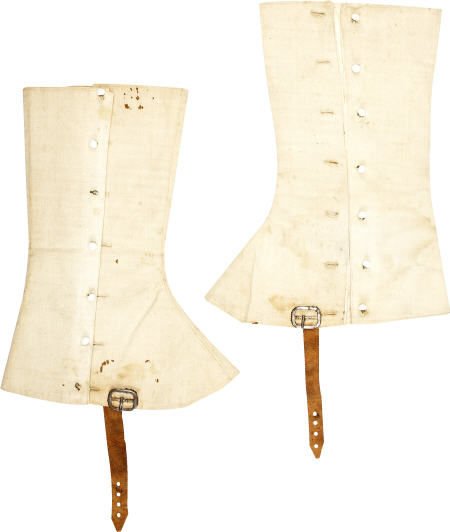
Gaiters, leather or canvas spats, were
primarily accessories of the Zouave-style uniform,
but white gaiters like these were also
used by the WA at the beginning of the war.
They kept dirt out of a soldier's shoes;
allowed the end of the pant to be covered, protecting
the soldier's underlying legs from
insects; and added cosmetic appeal to the uniform's overall dress look.
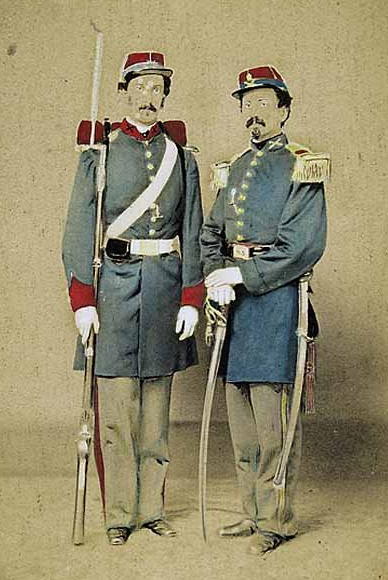
Hand-tinted albumen image of Edward &
William Miller Owen (right)
showing antebellum-era officer's militia uniforms
circa 1861
(Enlistedman's uniform left/officer's right)
Note the small brass pelican over William
Miller Owen's crossed cannon on his kepi.
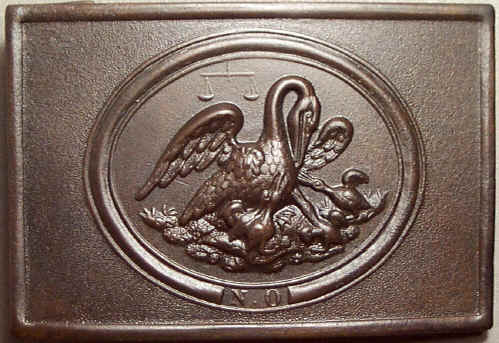
Rectangular pelican (marked "N. O.") buckle
type used by William Miller Owen in above image
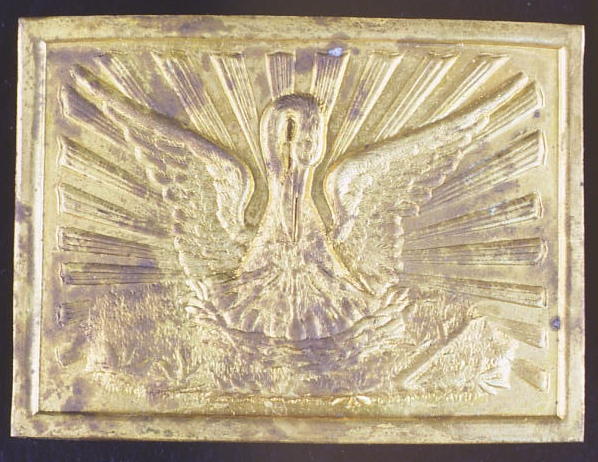
Rectangular pelican "with rays" buckle type
used by Edward Owen in above image
Washington Artillery Enlistedman's
Uniform
Antebellum 1858-1860
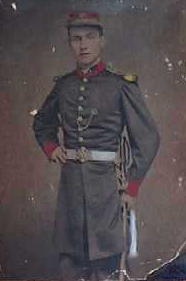
Hand-tinted albumen image of
A. R. Blakeley, 2nd Co. WA.
showing militia uniform with accoutrements-circa
1861
Although the prewar militia style uniform of
the 1850s continued, the shako hat was retired for the kepi.
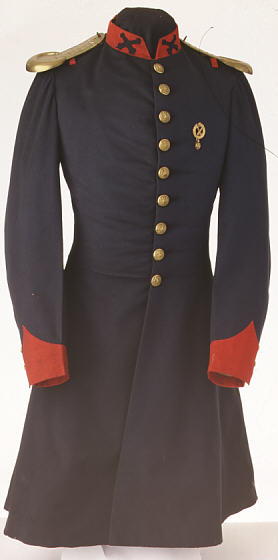
Washington Artillery
Antebellum militia uniform of
J. B. Richardson
(Courtesy Confederate Memorial Hall Museum)
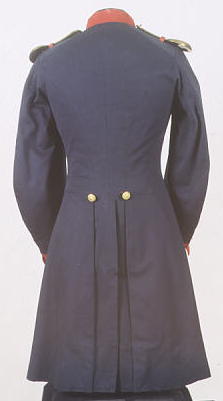
rear view
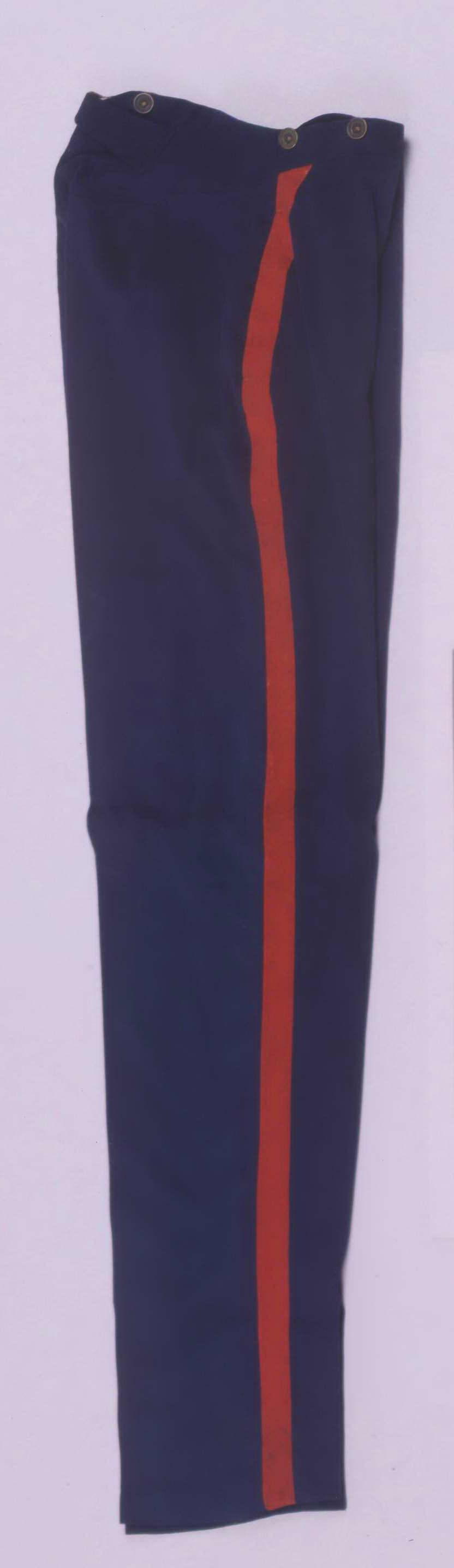
pant
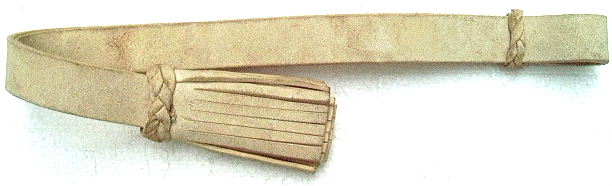
White buff leather sword knot
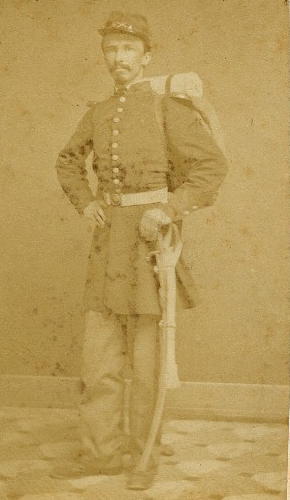
Private T. H. Fuqua, Third Company WA
circa 1861
(from cdv)
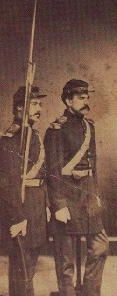
WA Enlistedmen (left)
Captain B. F. Eshleman (right) circa 1861
(from imperial size albumen print)
Civil War Era
Washington Artillery uniforms changed to
regulation CSA models after confusion at the battle of Manassas at the beginning
of the War Between the States. Their militia blue coats looked too much like the
federal uniforms of the North.
Officer's
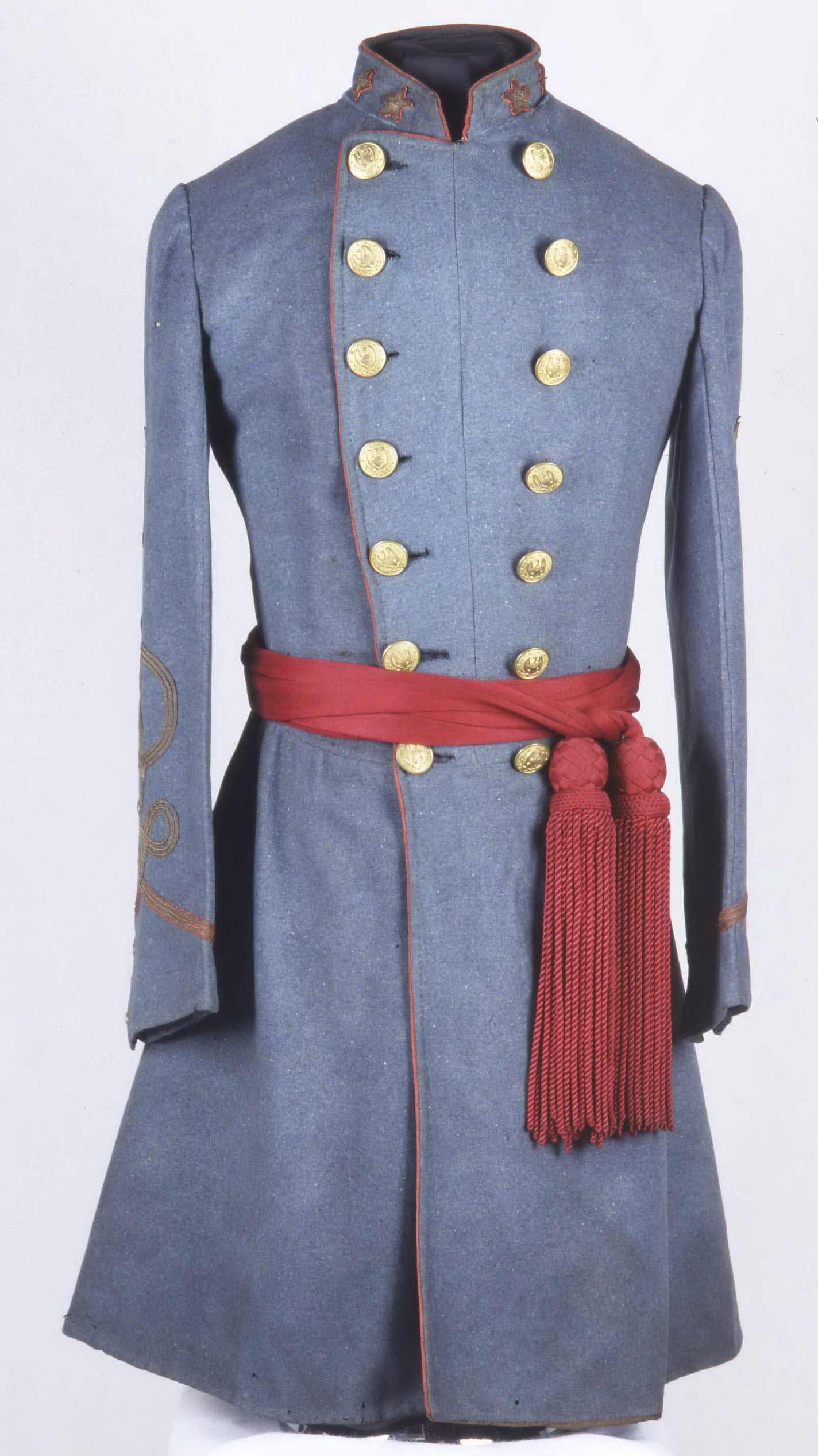
Frock Coat
belonging to
William Miller Owen
Owen had his Confederate officer's frock
coat tailor-made to his specifications. He chose a special bluish-grey material.
However, by 1864 this uniform had seen heavy use. Unable to afford the purchase
of a new one, Owen commented, "Desiring to make a presentable appearance in
Petersburg, my good friend Mrs. Dunn has employed a sewing woman to renovate my
uniform coat, to turn it inside out, at the cost of $50...[as] ...a new one cost
$500."
(courtesy Confederate Memorial Hall)
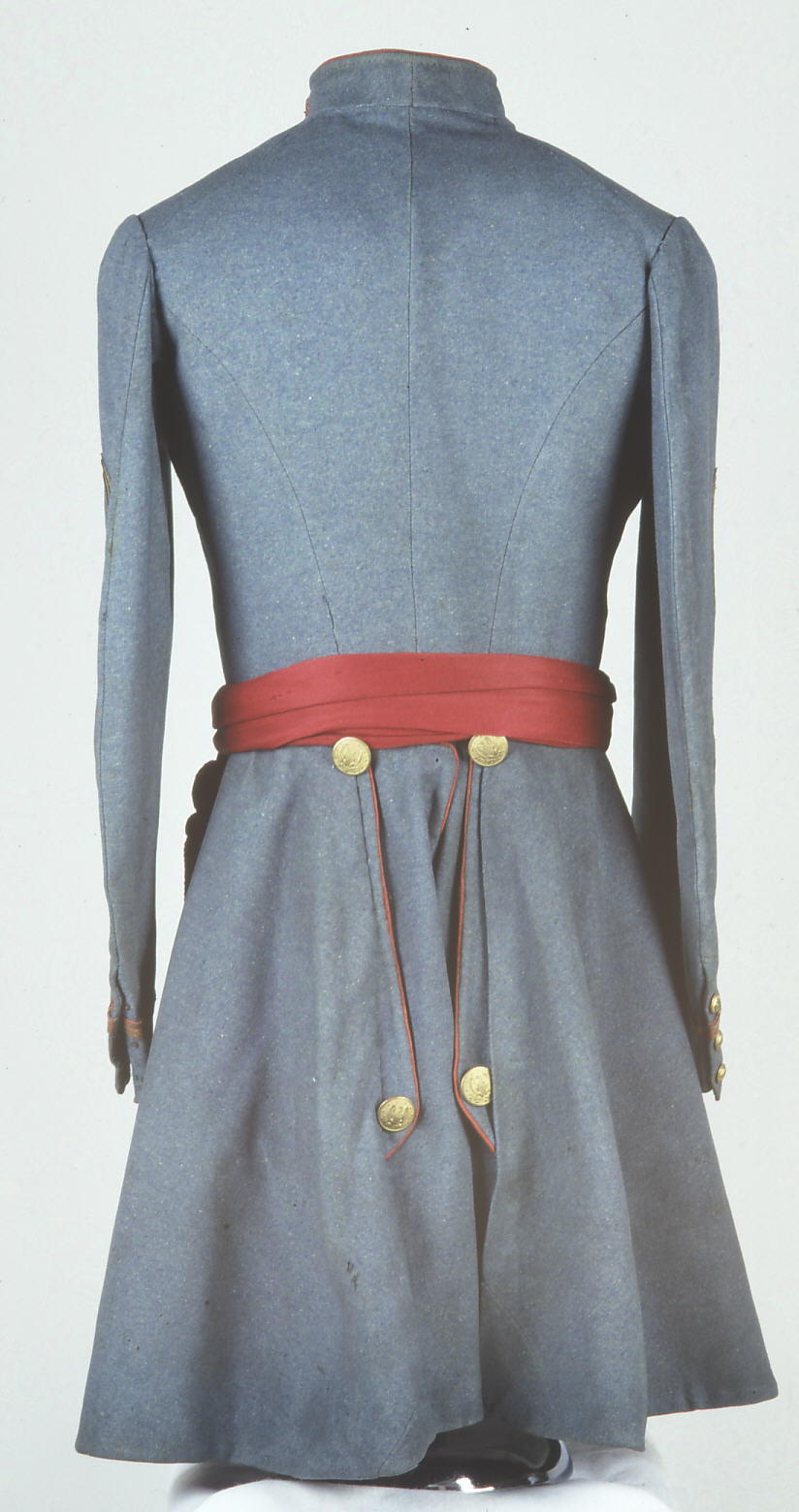
rear view
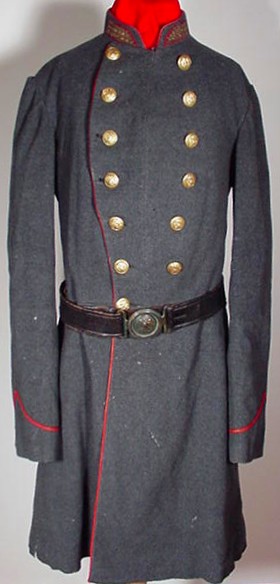
Frock Coat
(made of "Richmond Grey" fabric)
like that worn by a Confederate Washington
Artillery officer by late 1861 and for the duration of the war.
Civil War Enlistedman's Shell Jacket
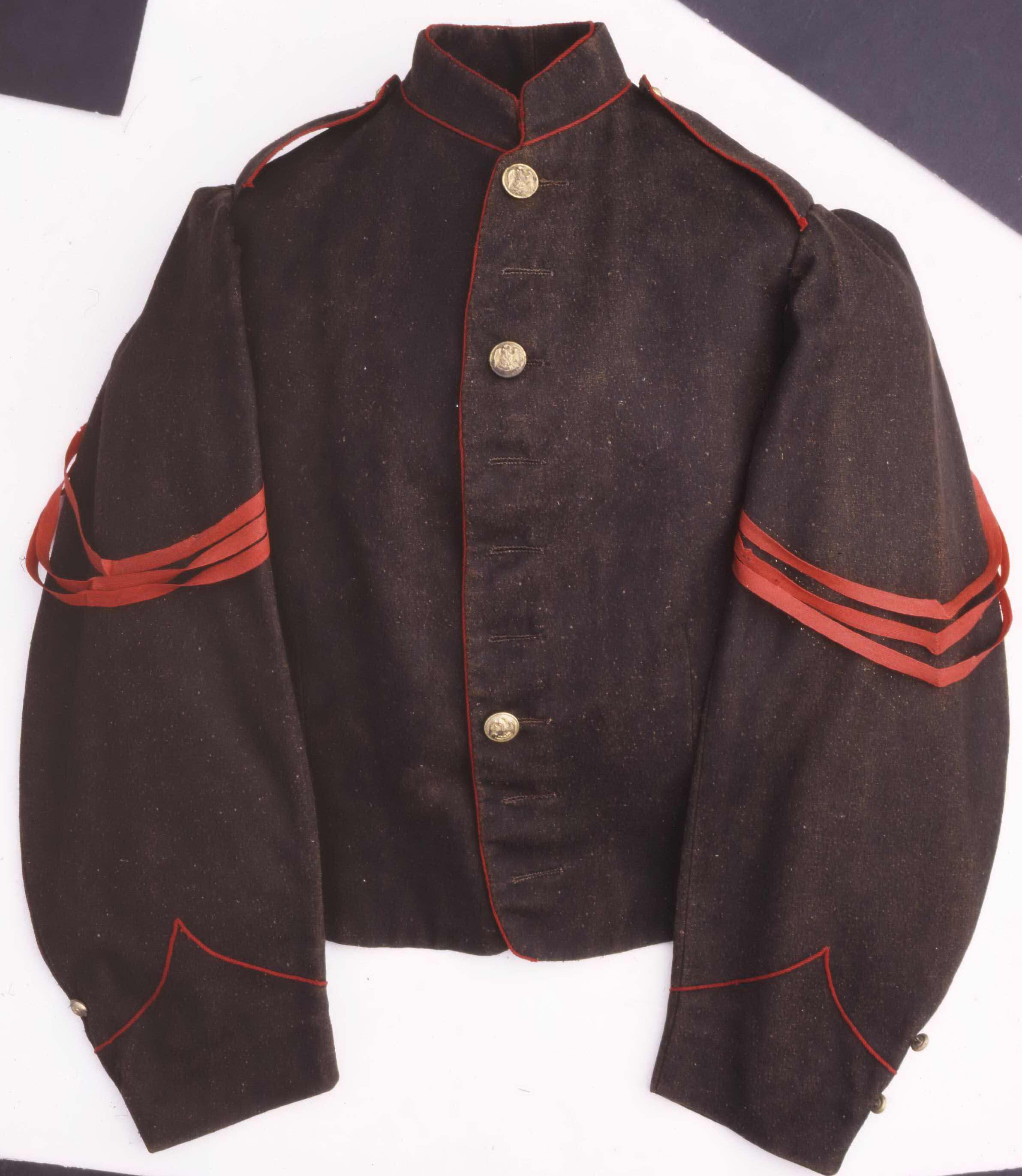
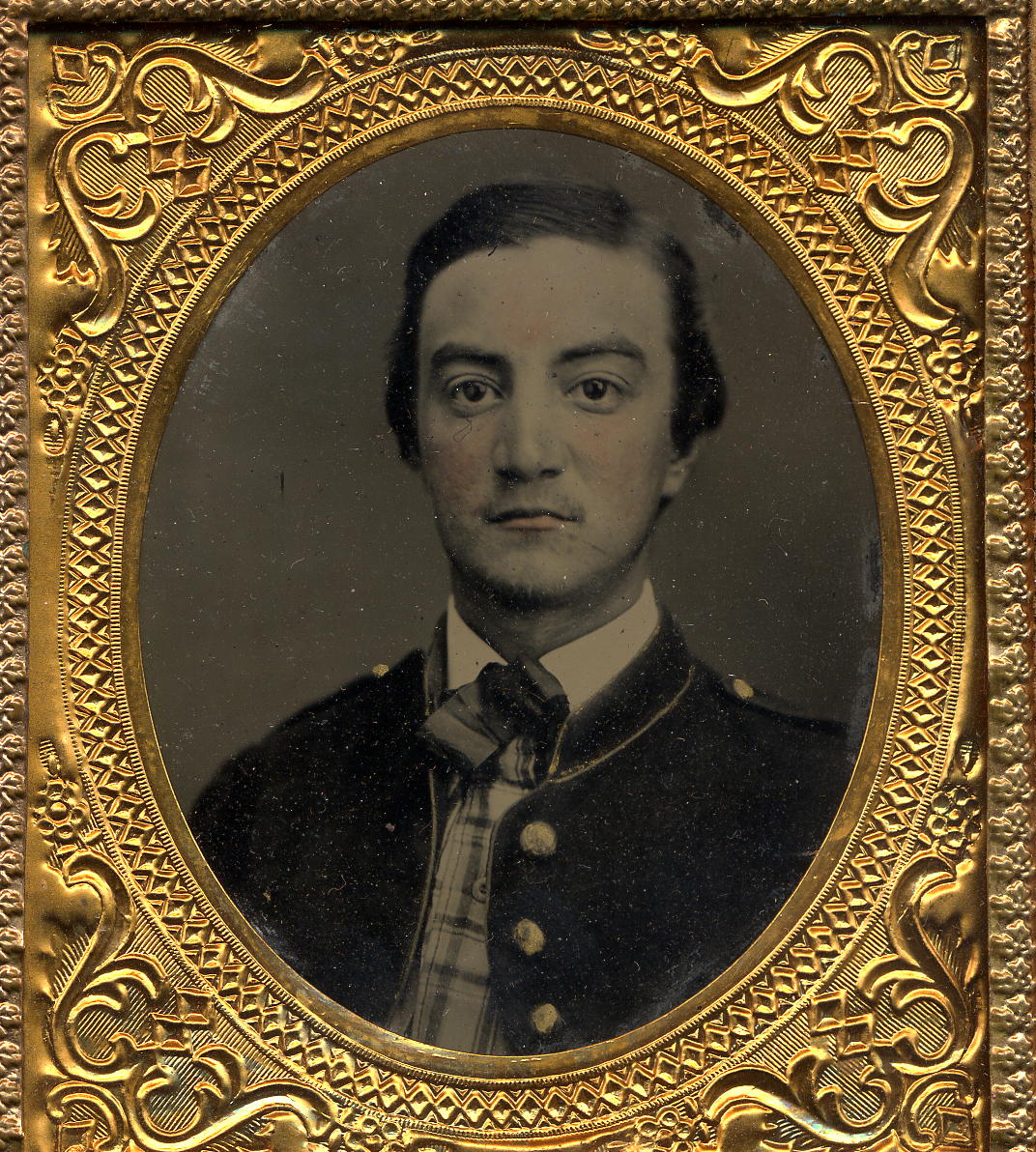
Shell Jacket (left), Joseph Denegre, 5th Co.
WA, wearing similar jacket (right)
5th Company,
Washington Artillery
(jacket courtesy Confederate Memorial Hall)
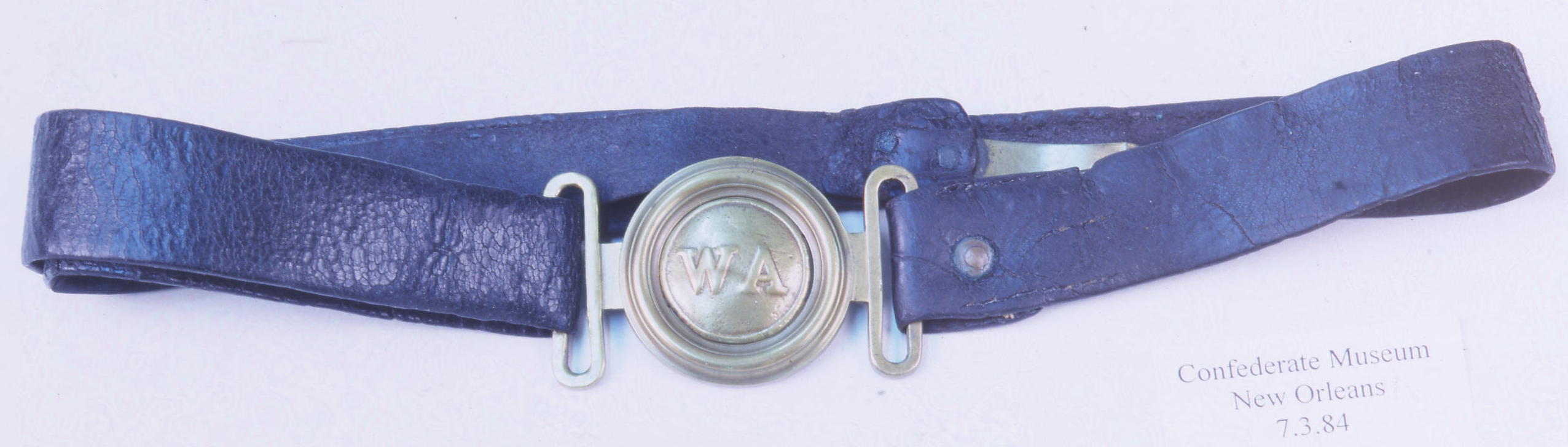
Washington Artillery belt
Two-piece cast "WA" buckle on belt,
the latter made from
a musket sling
(courtesy Confederate Memorial Hall Museum)
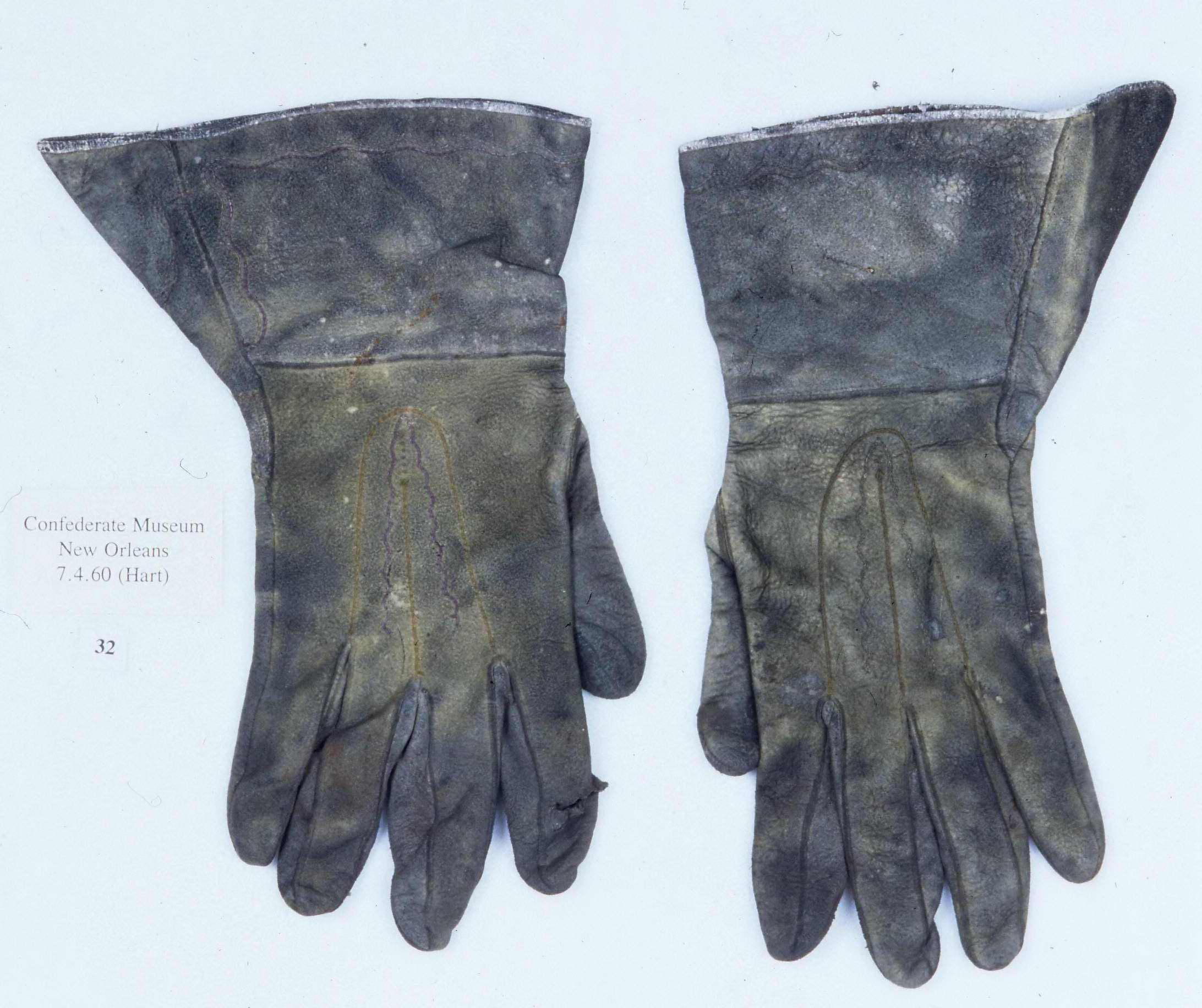
WA Artillery gloves
(courtesy Confederate Memorial Hall Museum)
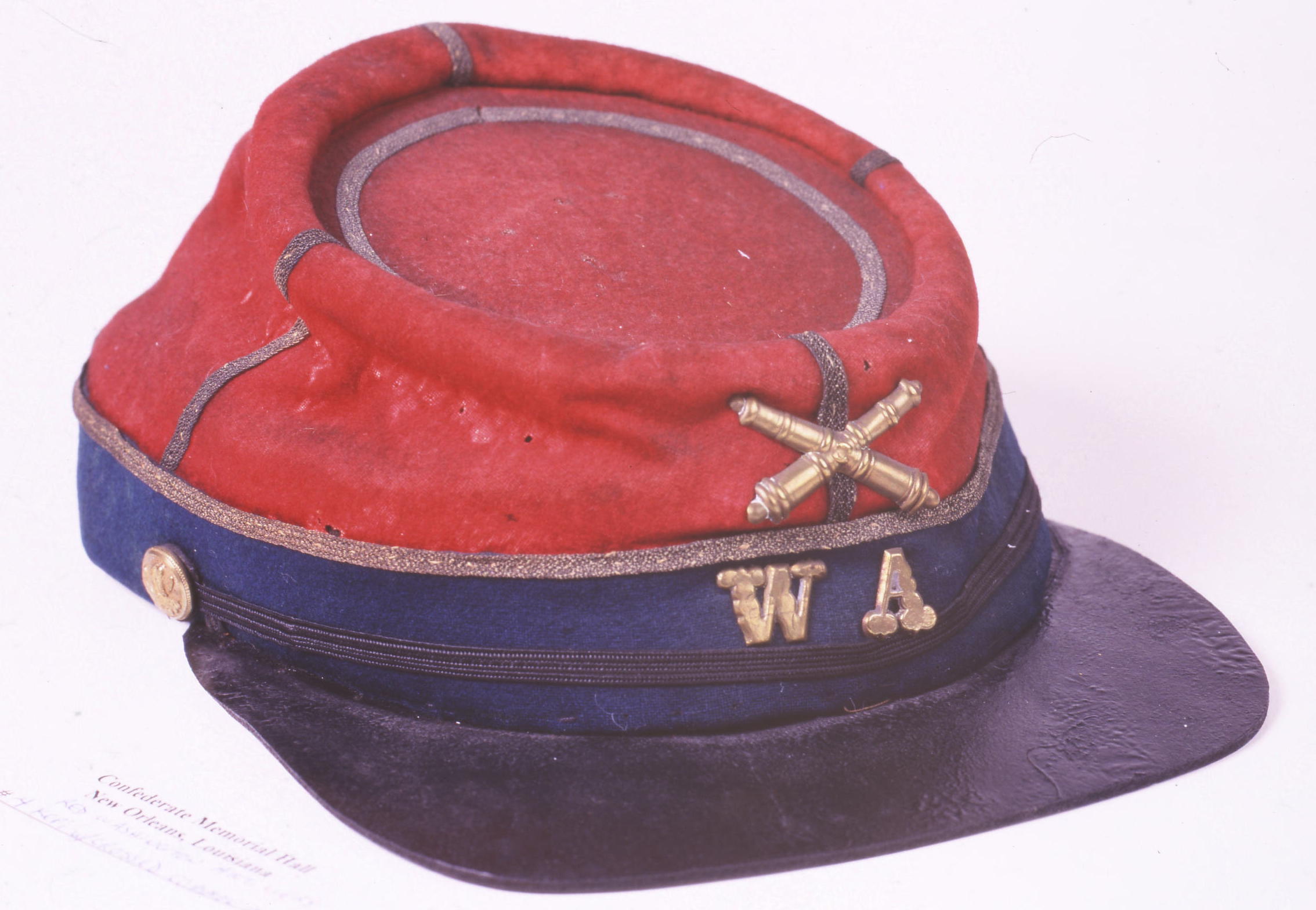
WA kepi
Lieutenant's kepi, Washington Artillery
(with Zouave-style brass letters "WA" and
Louisiana pelican kepi buttons)
(courtesy Confederate Memorial Hall Museum)
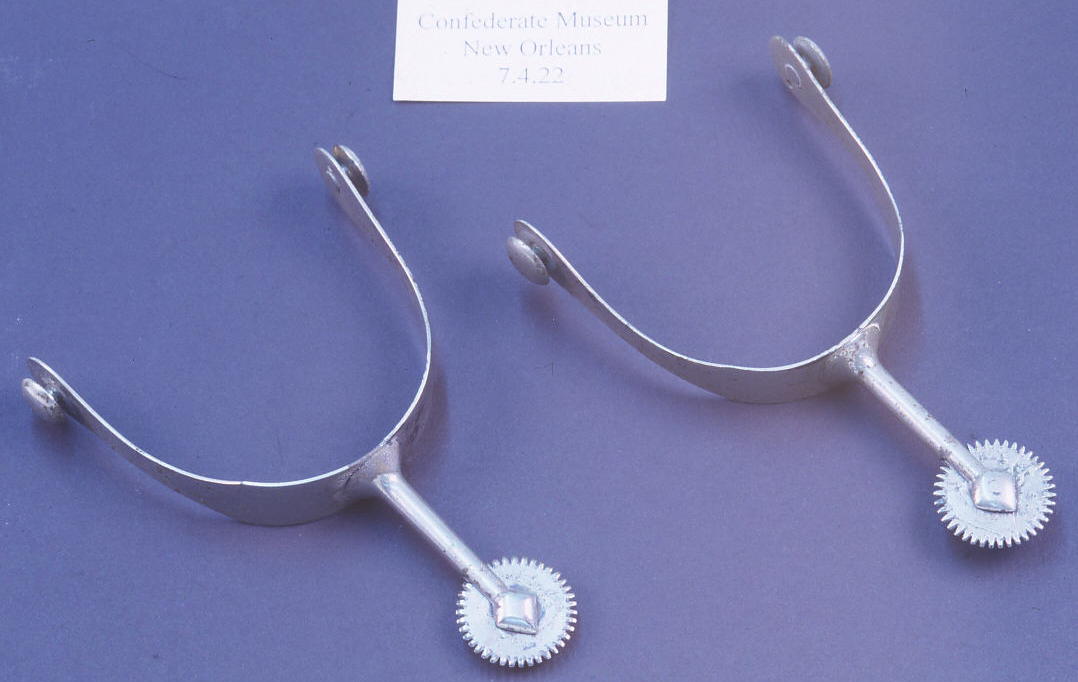
spurs
Lt. Vaught, 5th Co. WA
the rowels, directed 90 degrees from normal,
were made from two New
Orleans-made silver quarters
(courtesy Confederate Memorial Hall Museum)
This practice may have been a WA tradition
as the rowels of the spurs belonging to the 1856 WA Commander,
Horace L. Hunting, were also made
from New Orleans-minted silver coins.
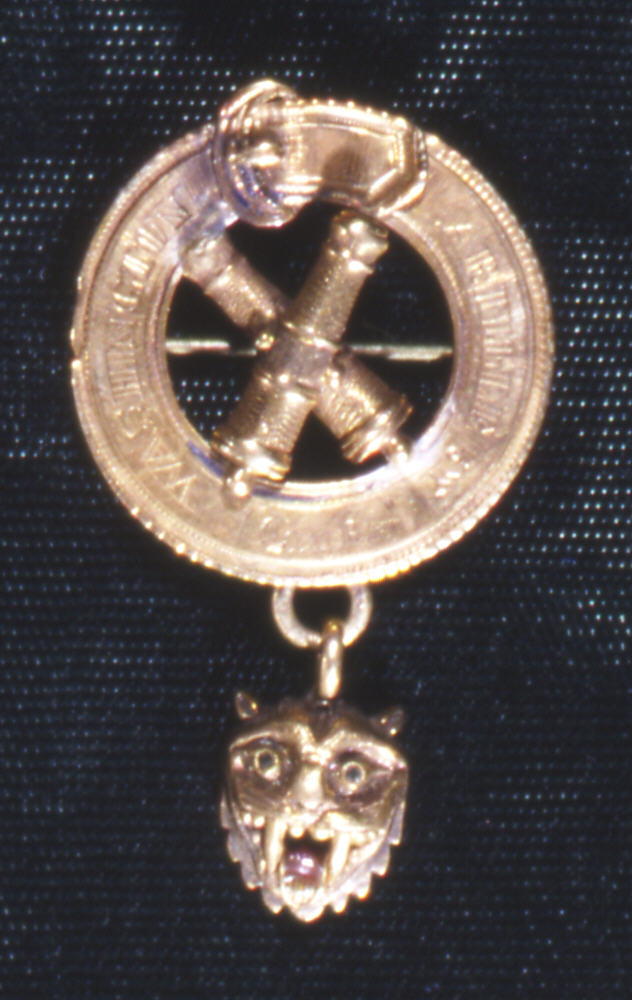
badge
This form has a tiger head hanging from its
artillery belt.
(courtesy Confederate Memorial Hall Museum)
1870s
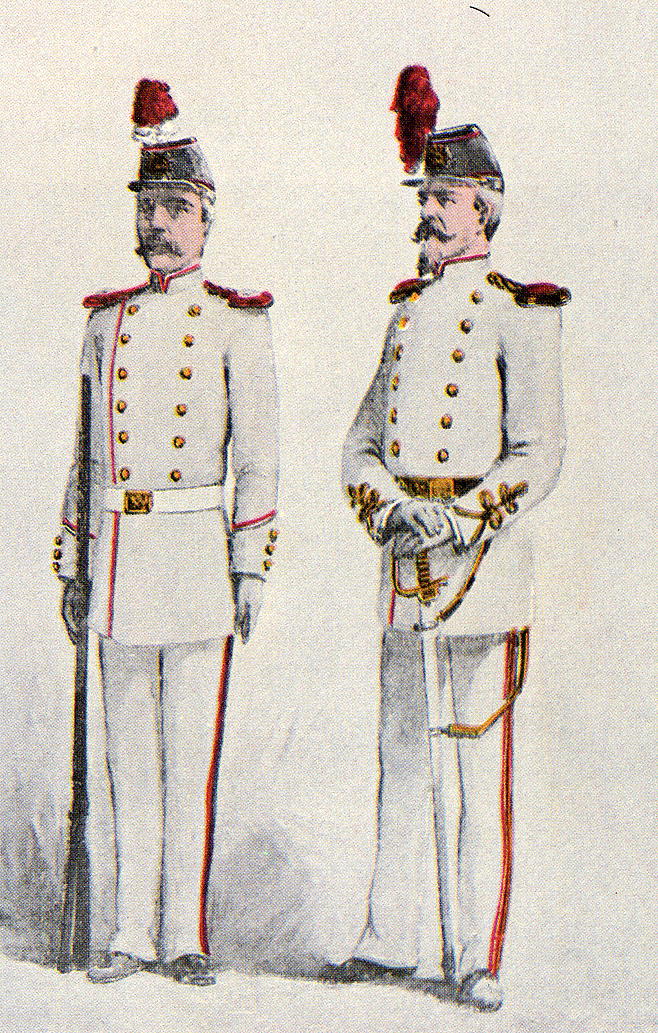
Washington Artillery dress uniform 1872
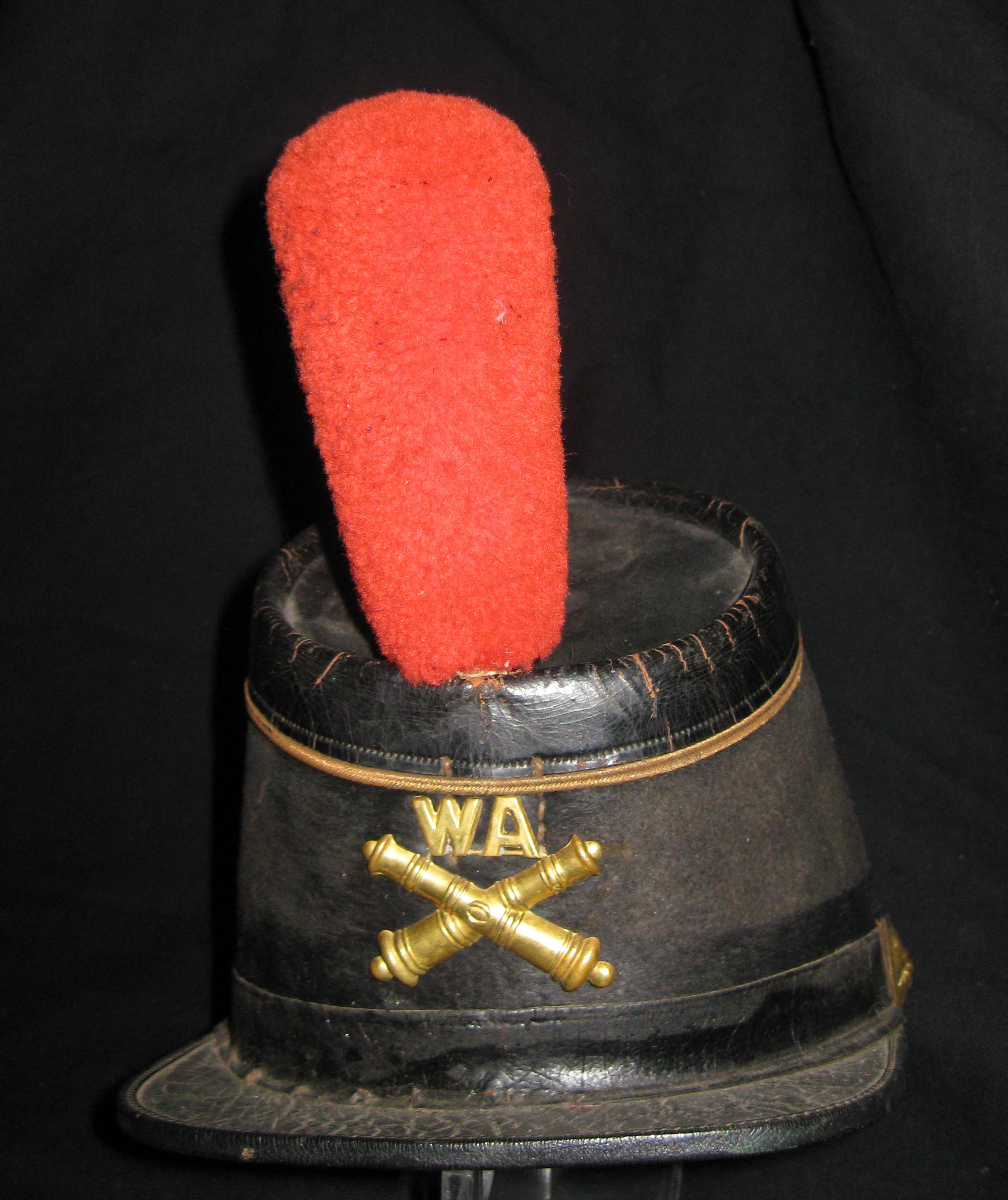
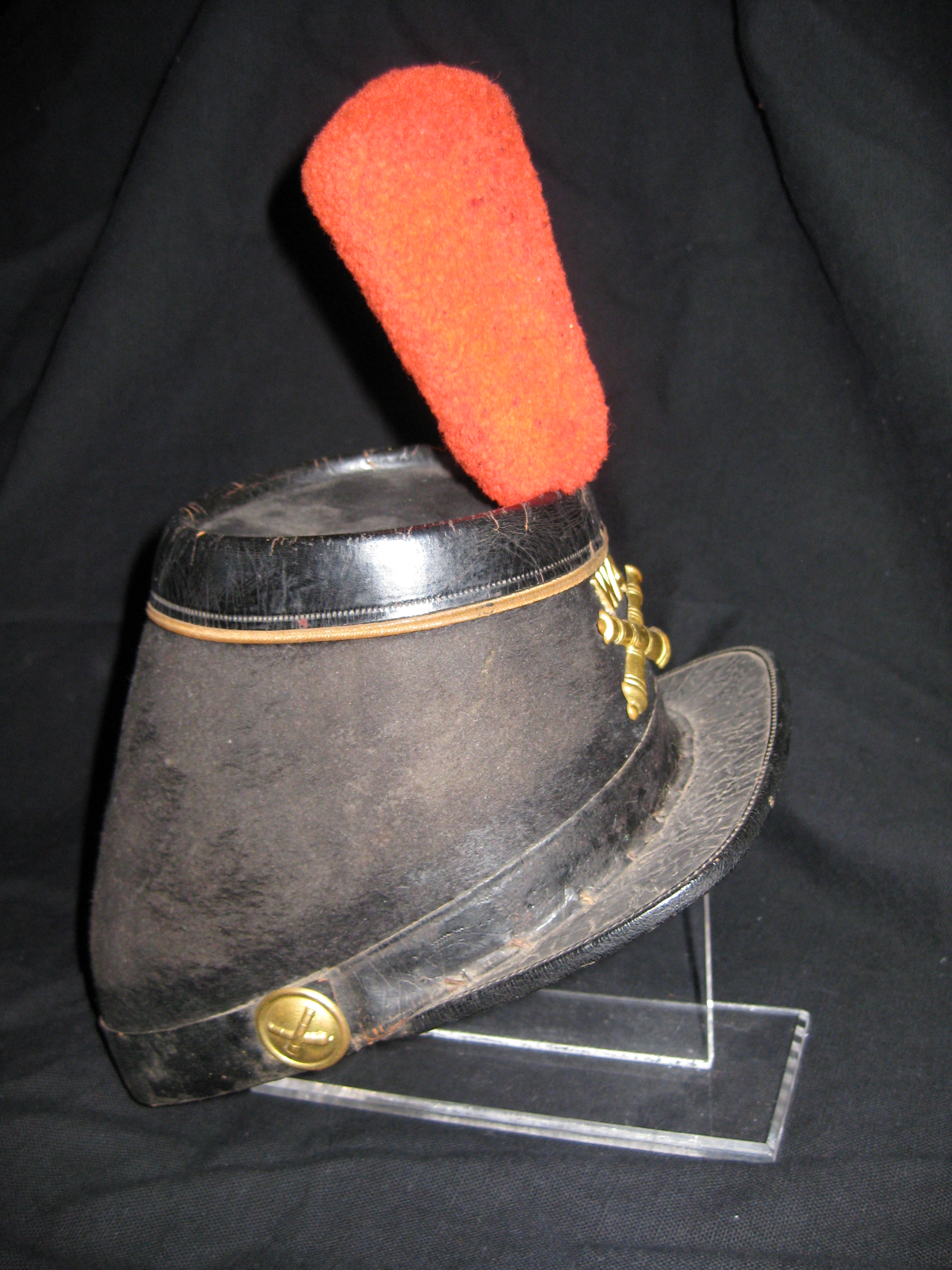
Washington Artillery dress shako circa 1870s-
enlisted man's model
circa 1870s (style used 1872-1881)
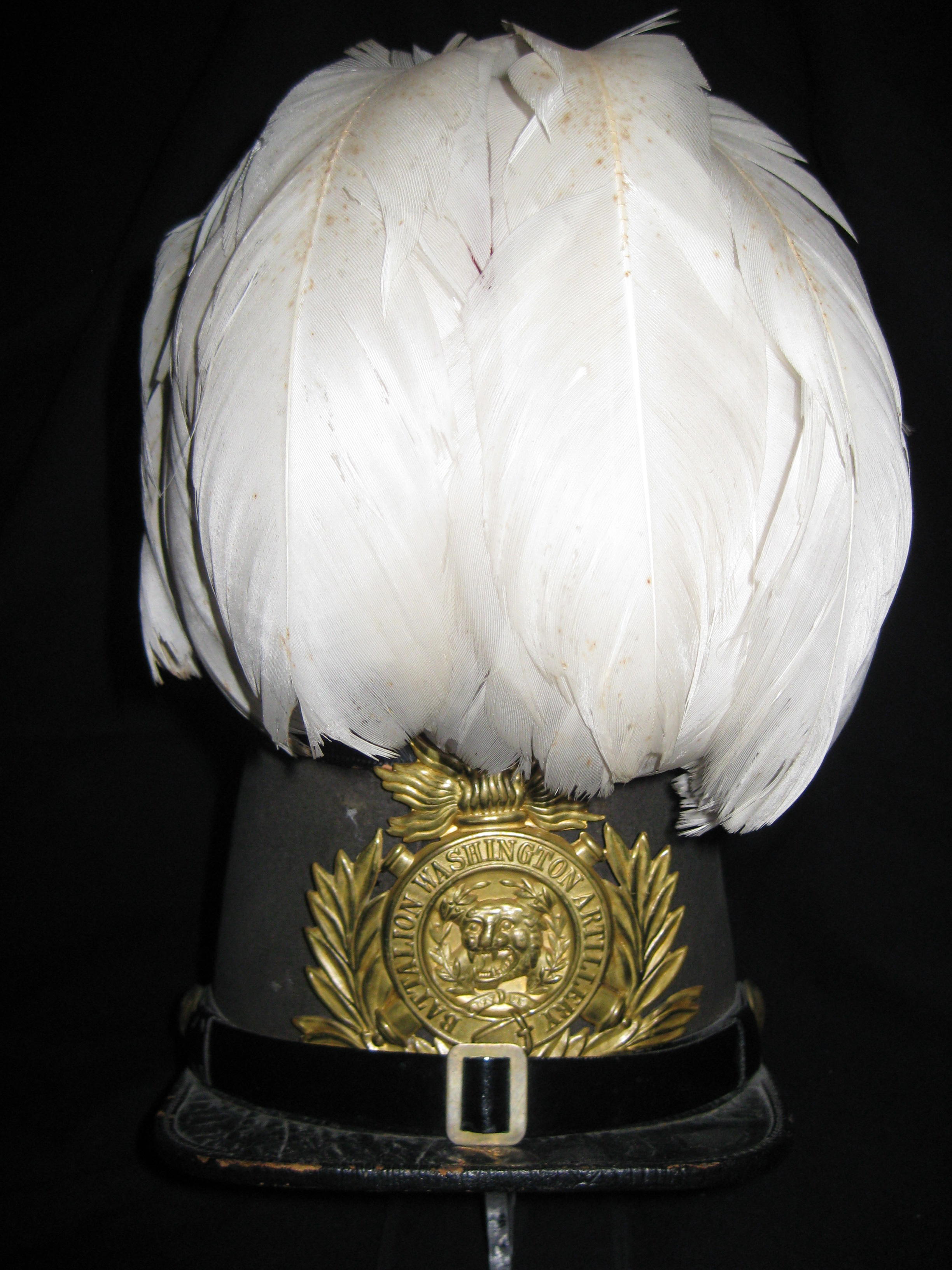
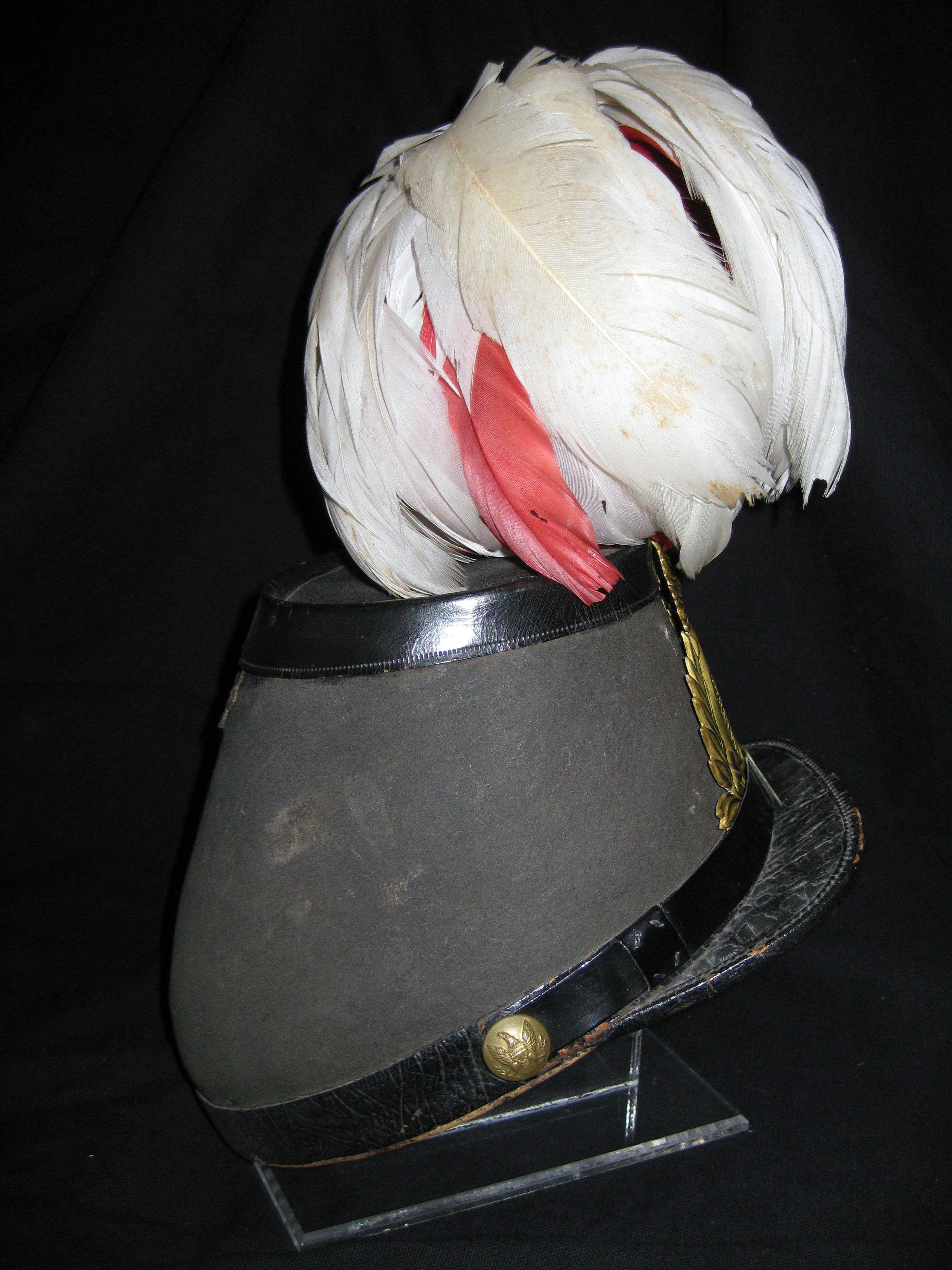
Washington Artillery dress shako circa
1870s- officer's model
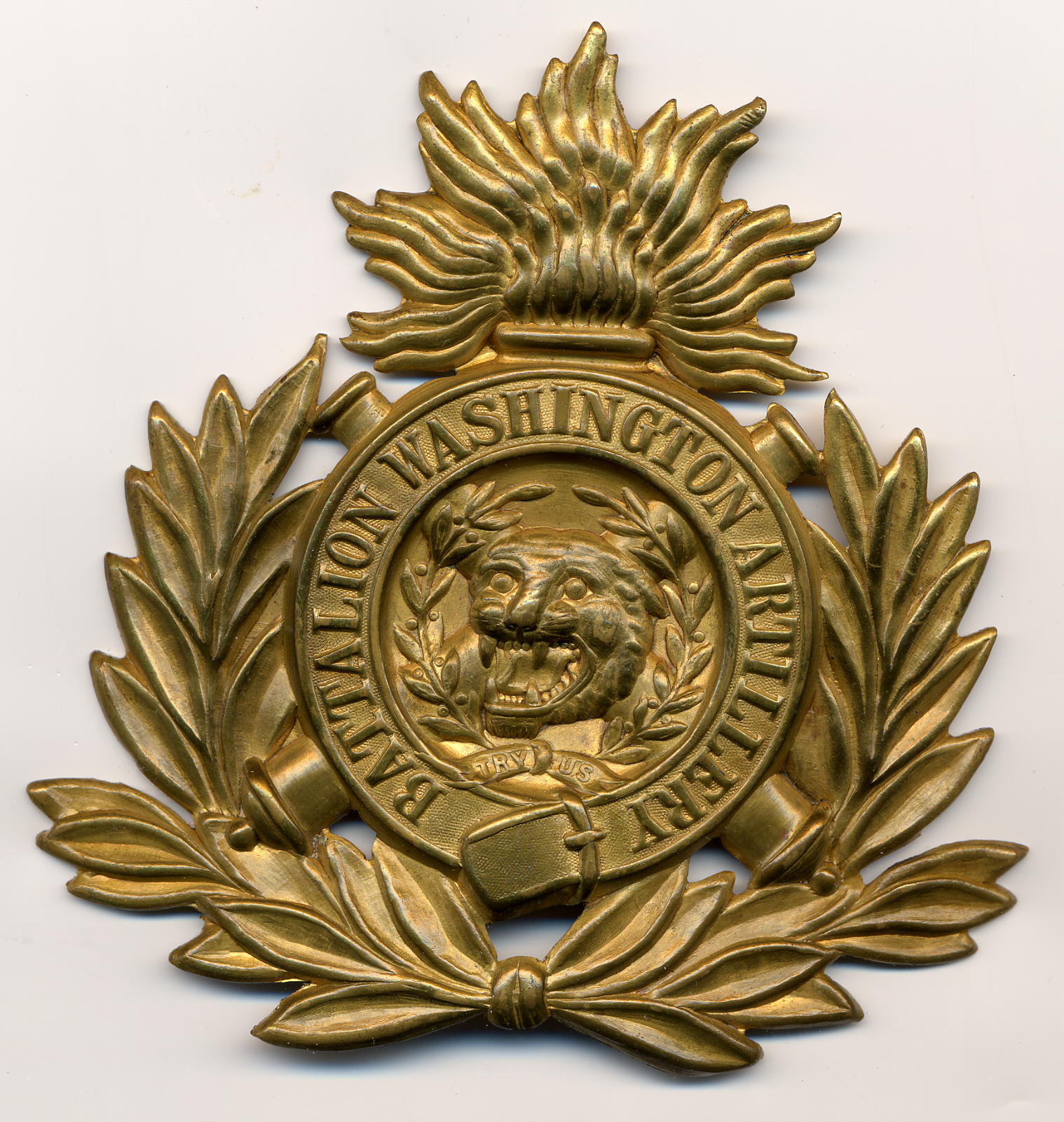
Close-up view of shako's badge insignia
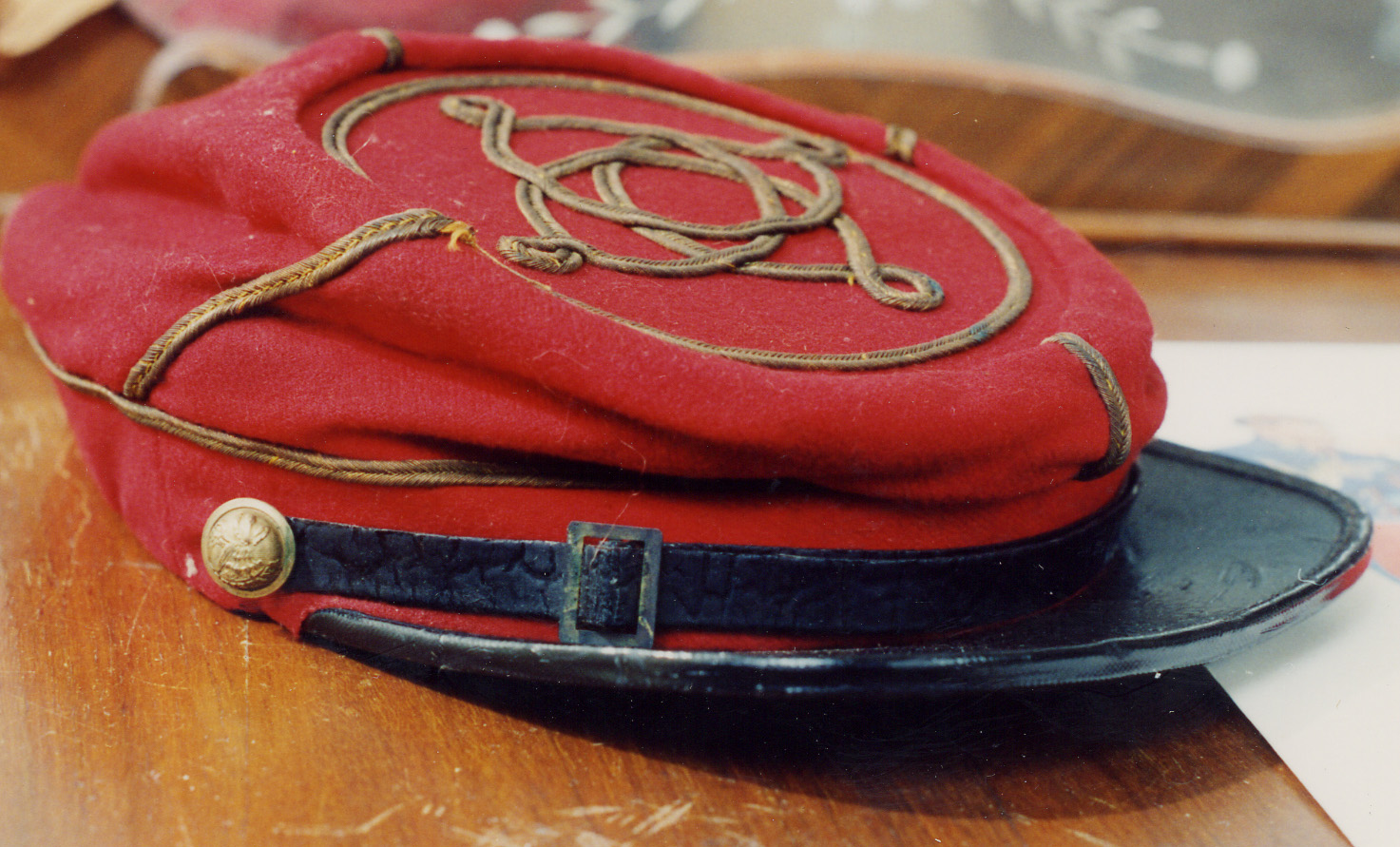
WA kepi 1870s- Indian War era
Note similarity but differences to Civil War
era kepi pictured above.
(No peacock blue band, heavier grade gold
bullion,
post war pelican kepi buttons on sides and
two piece brim)
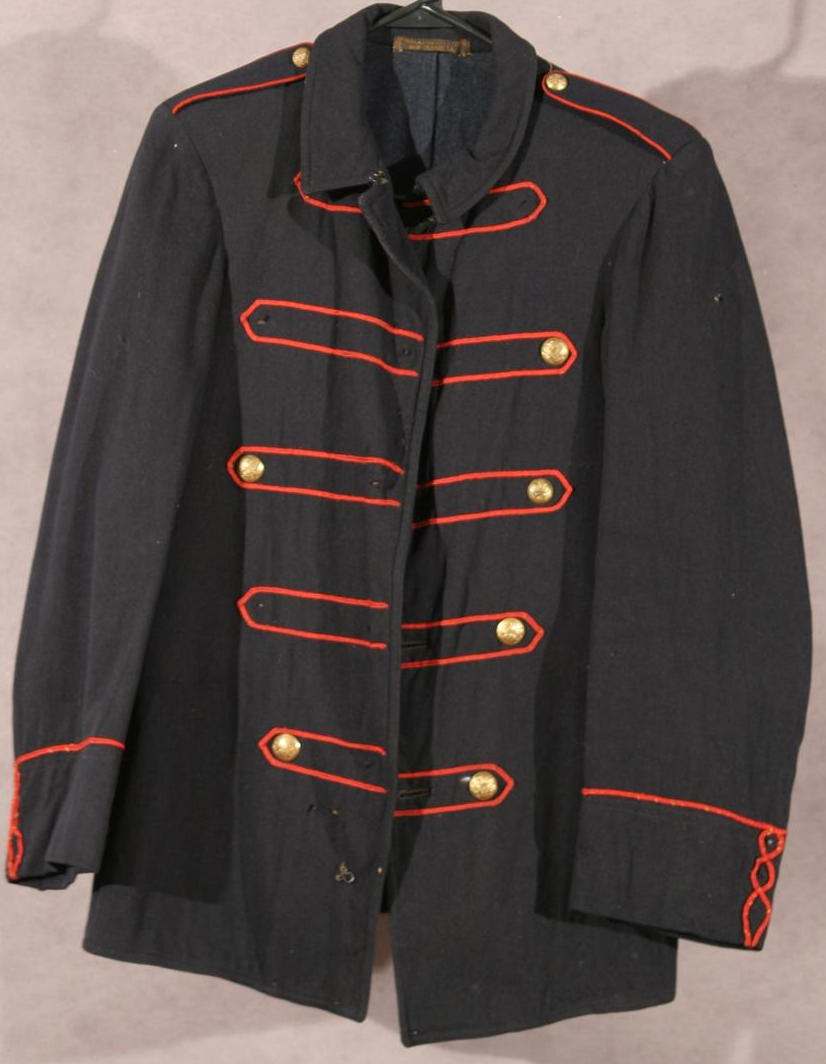
Artillery coat circa 1870s - undress
or possibly musician's blouse
Label inside coat reads "Walker & Zeller/
New Orleans, La."
[other photos pending]
1880s
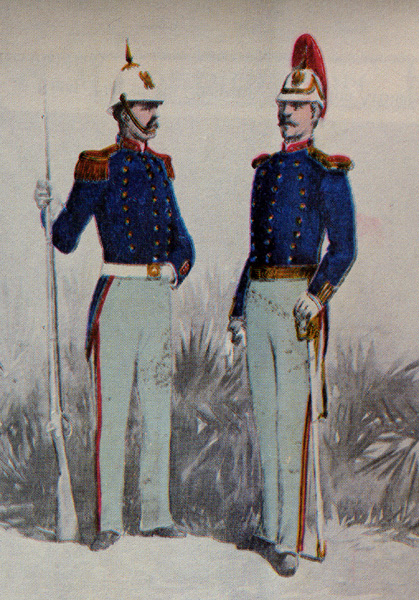
WA Model 1883 dress uniform
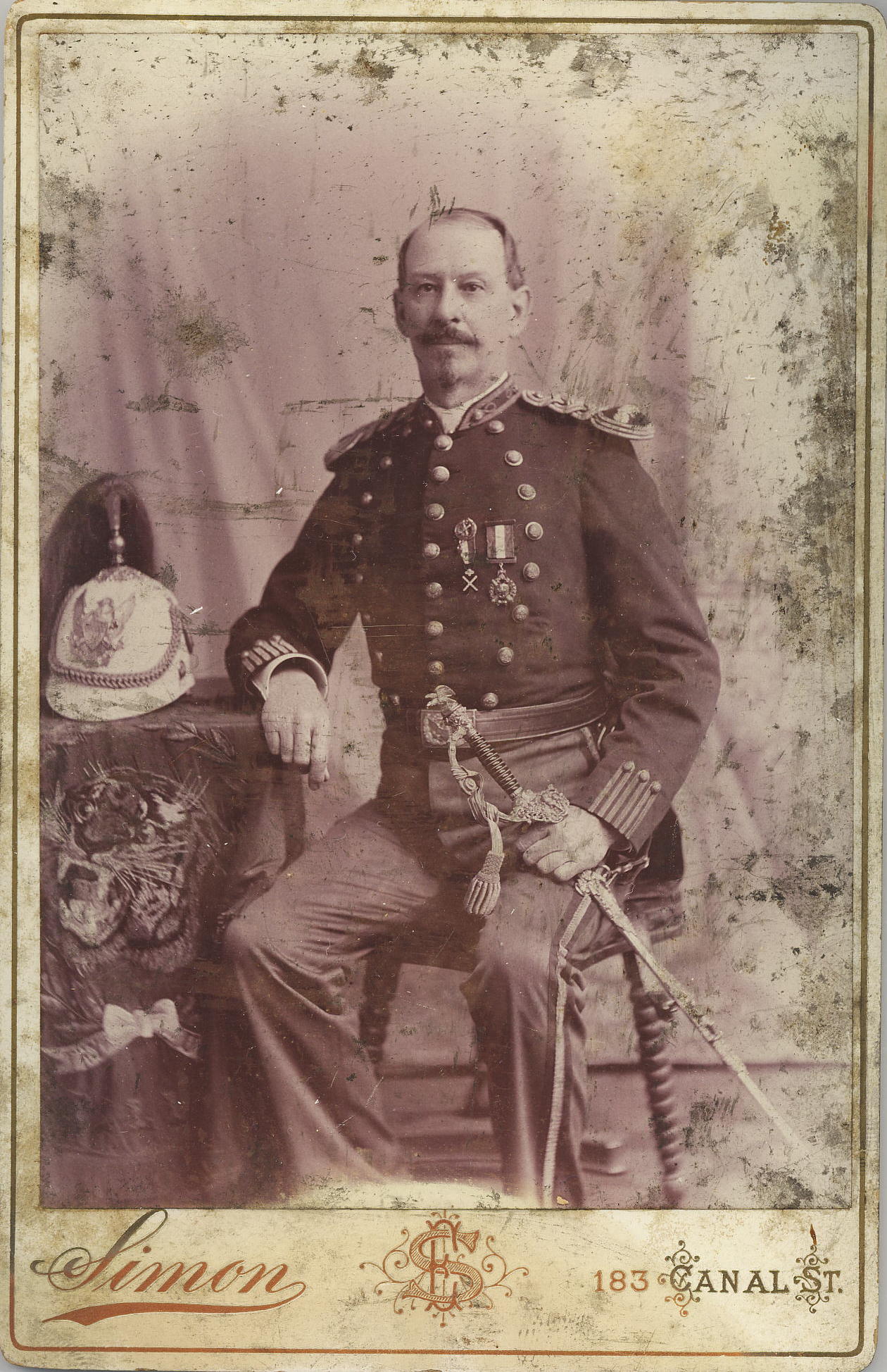
Washington Artillery Commander J. B.
Richardson
(cabinet card by Simon of New Orleans)
wearing his 1883 dress uniform.
(image courtesy Confederate Memorial Hall
Museum)
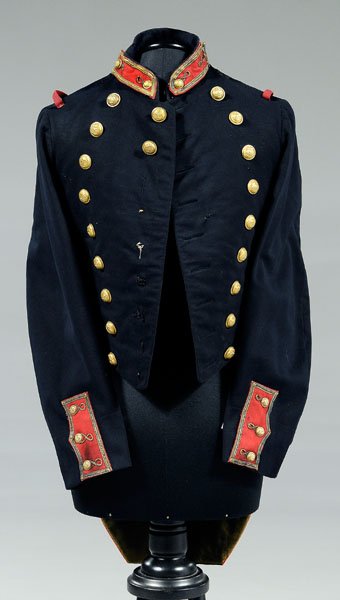
WA Model 1883 dress uniform
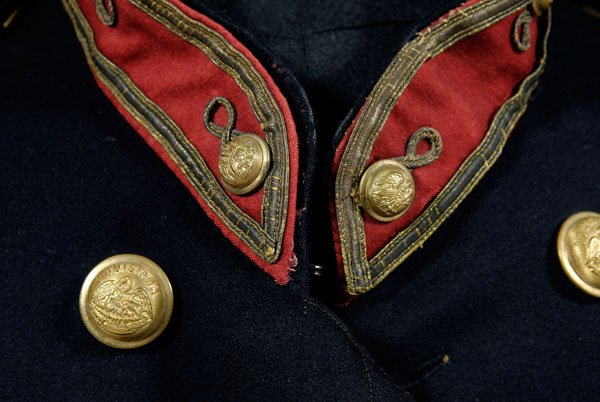
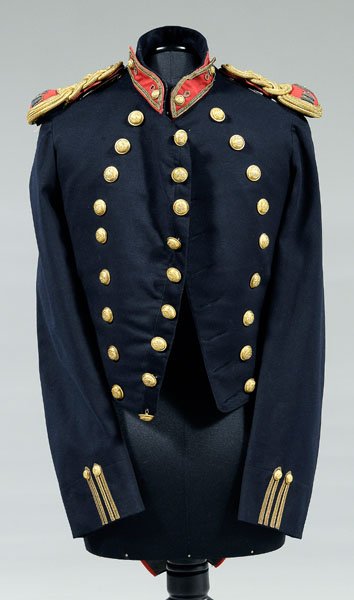
WA Model 1883 officer's dress uniform
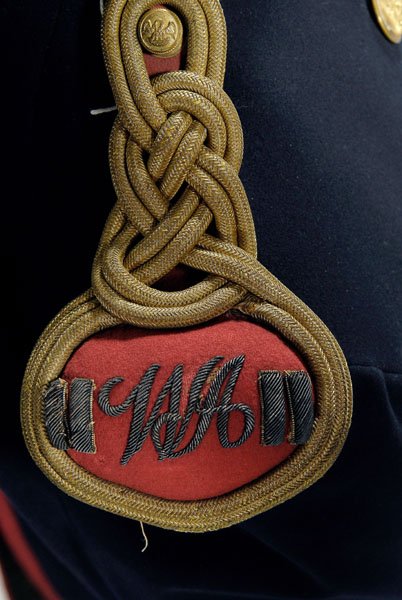
Captain's epaulette with sewn "WA"
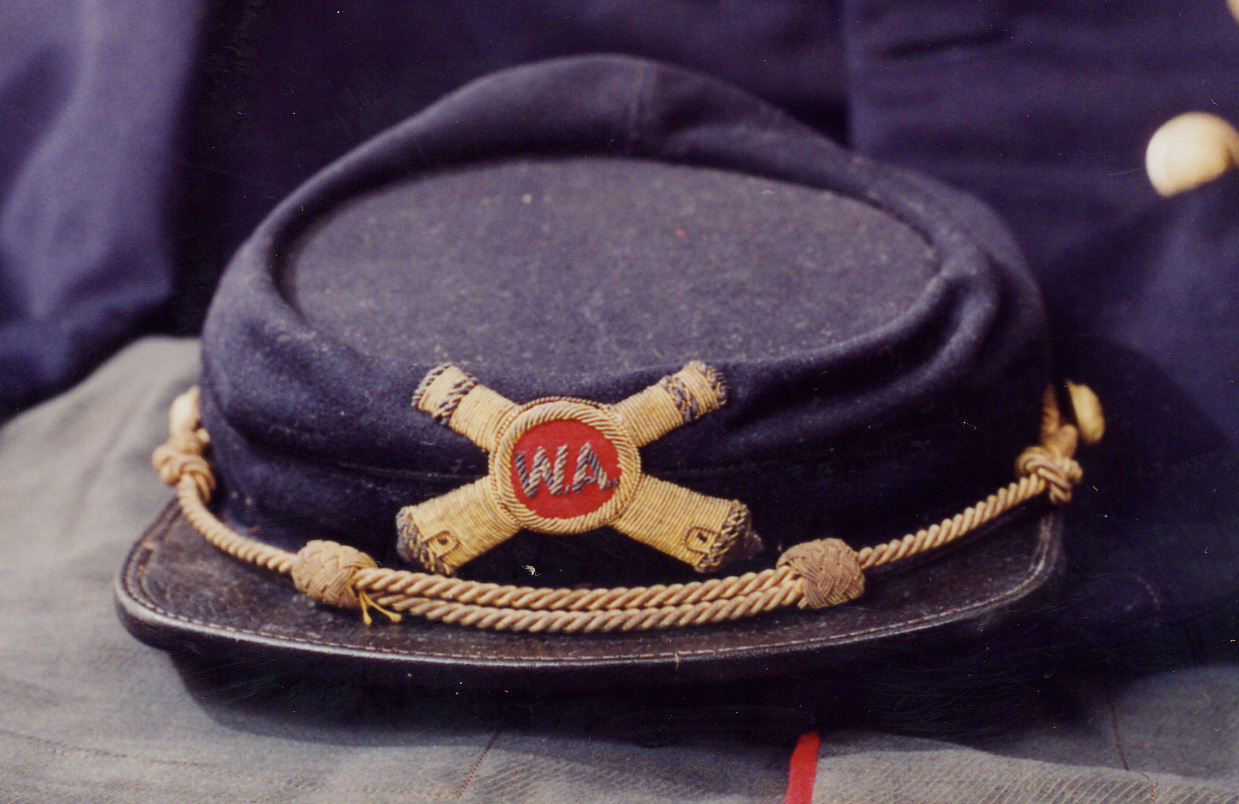
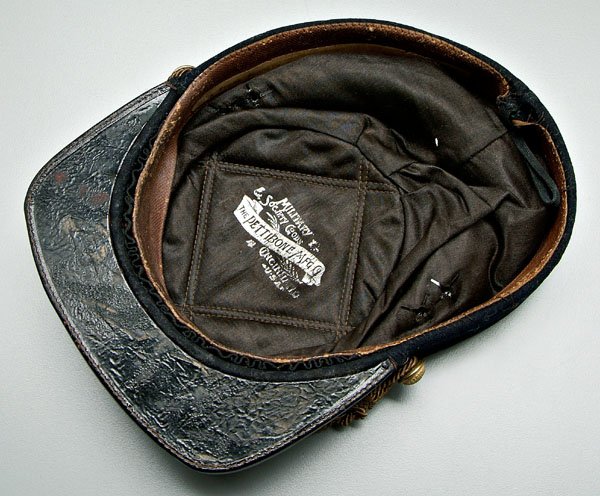
WA kepi
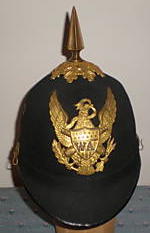
Undress WA foot artillery helmet
(circa 1881-1901)
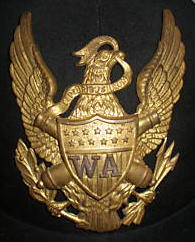
US shield with "WA"
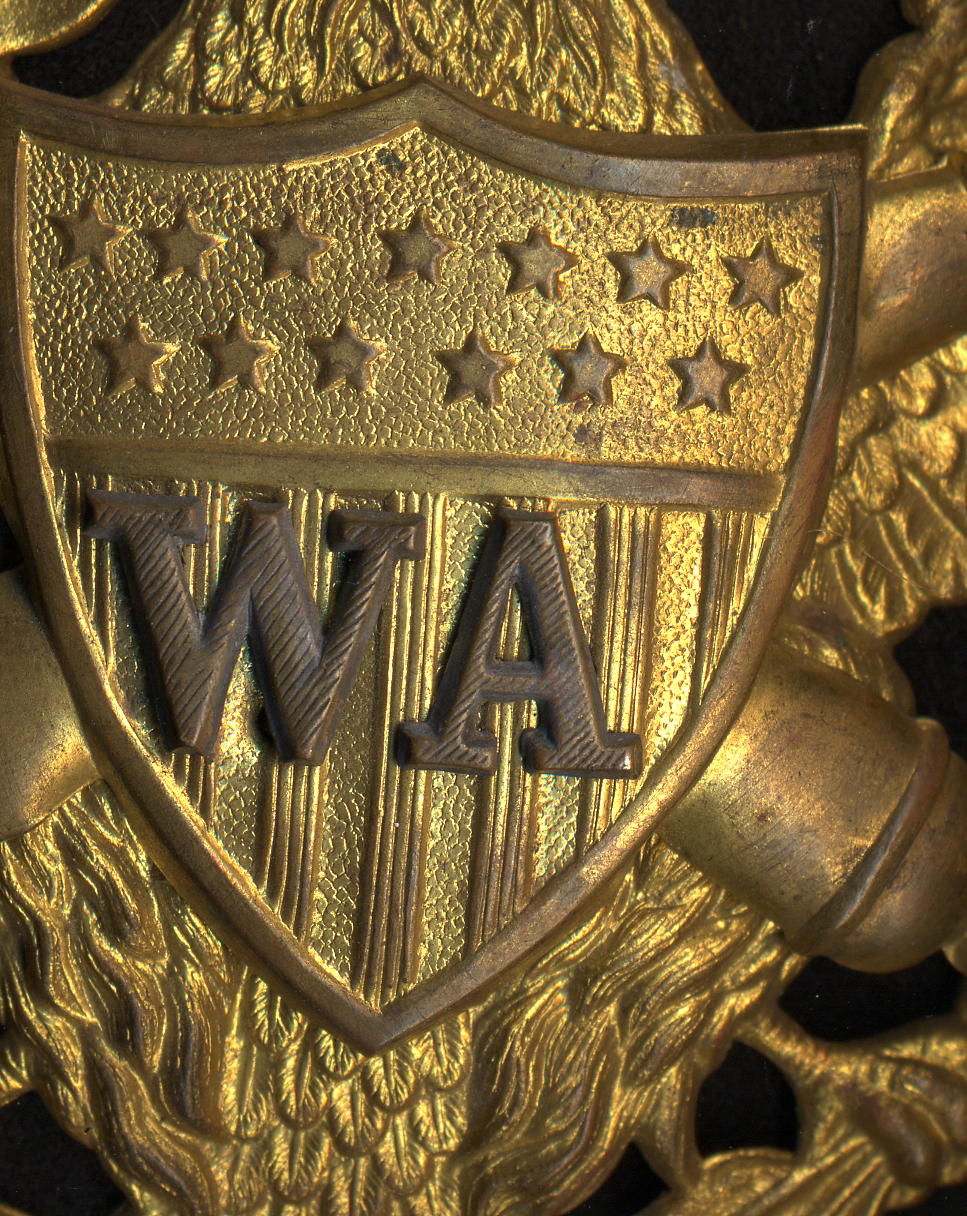
close up view of
"WA" on shako plate
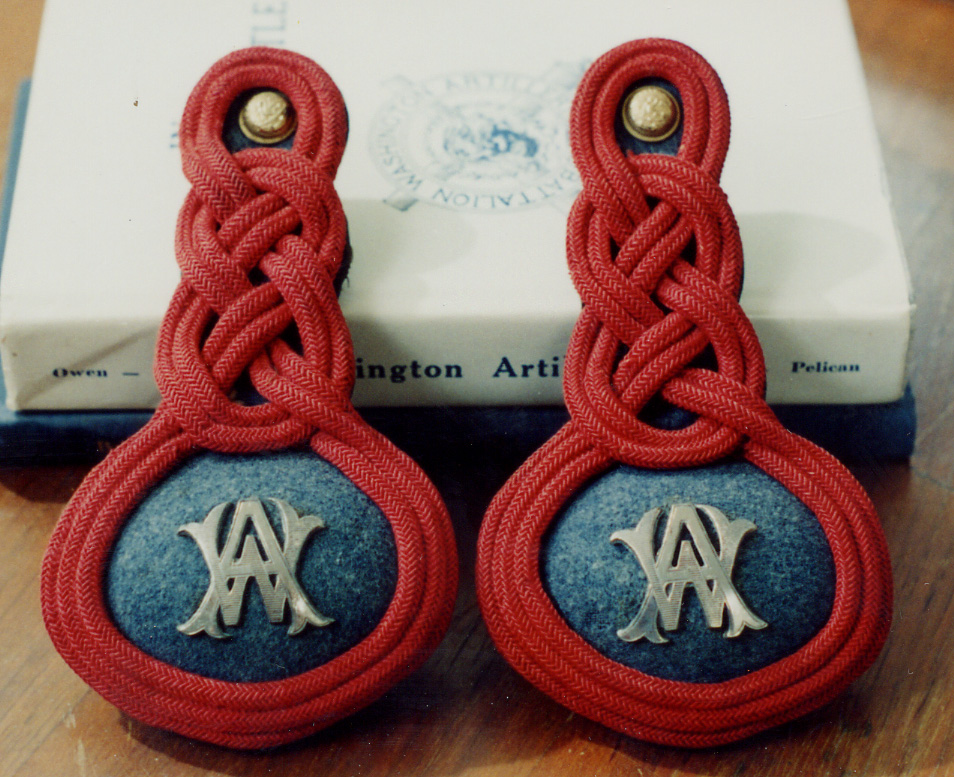
Epaulettes (officer) with solid silver letters in script "WA"
(circa 1901-1903)
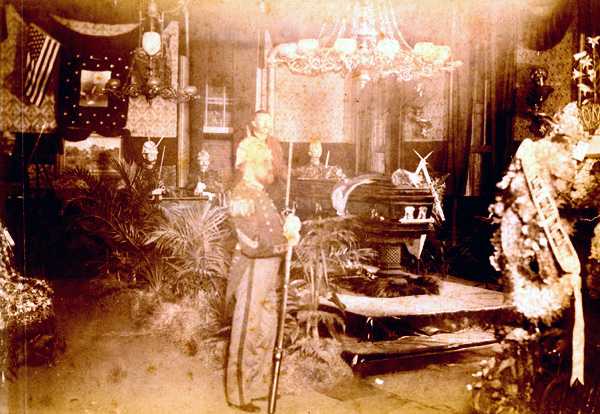
Washington Artillery honor guard in their M1883 summer dress uniforms
at City Hall, New Orleans as Ex-Confederate President
Jefferson Davis lay in state in 1889.
(image courtesy Confederate Memorial Hall Museum)
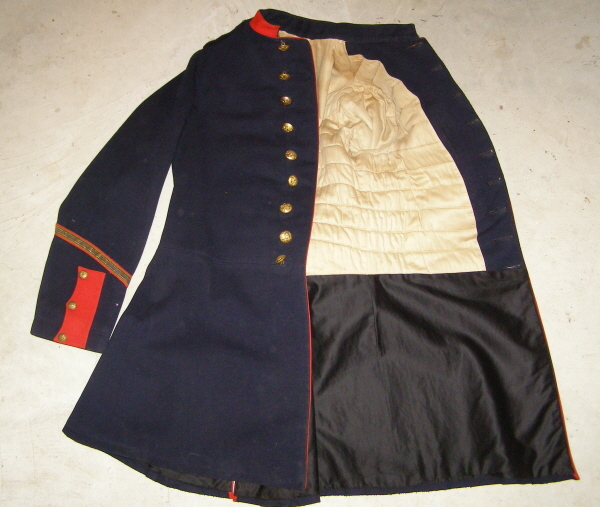
Washington Artillery US regulation dress uniform
frock coat M1881
Spanish American War-era
(1898)
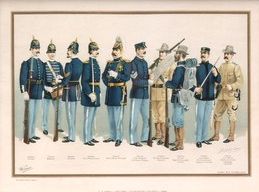
M1898 US uniform in various models
(Lithograph by H. A. Ogden 1899)
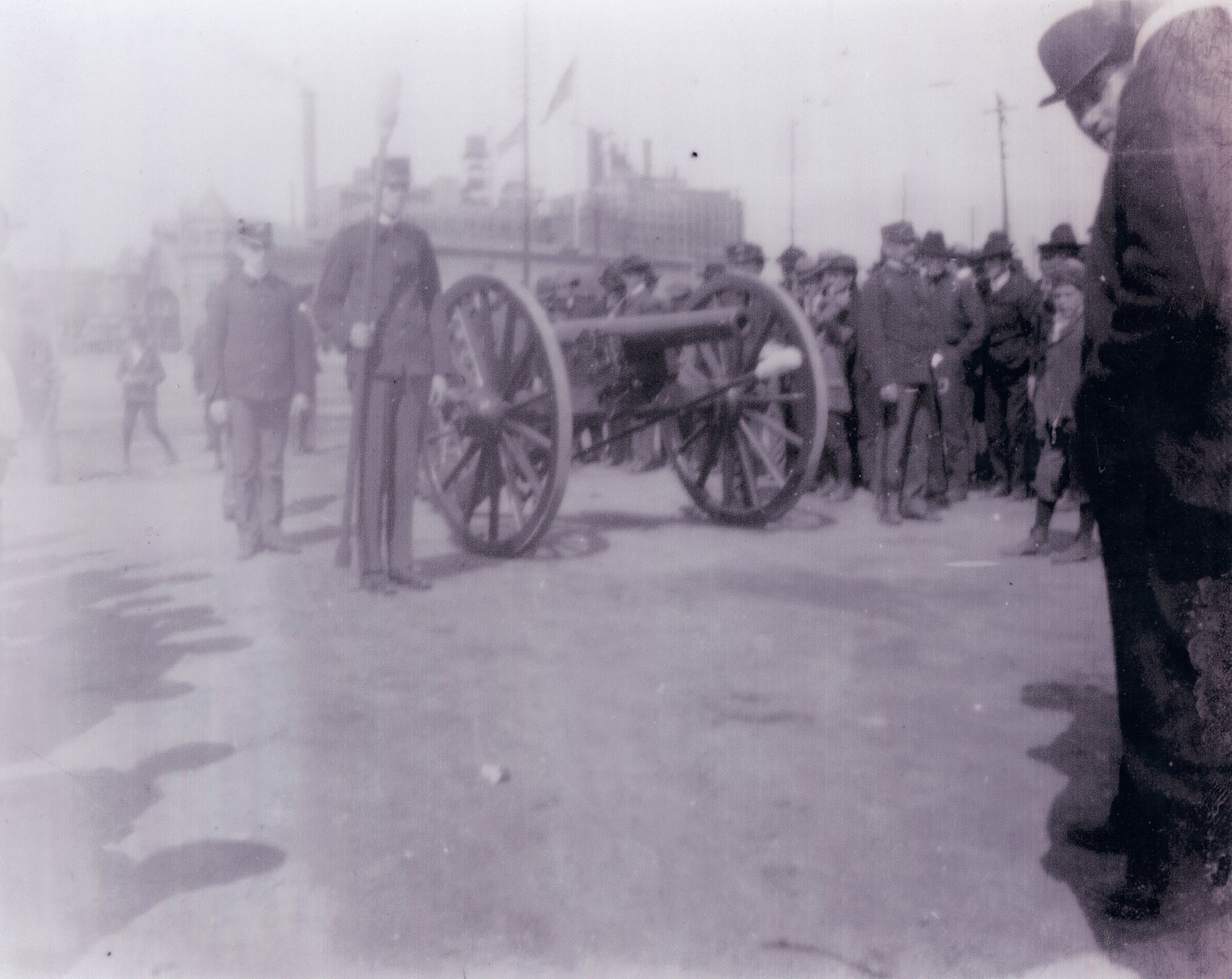
Washington Artillery firing at the foot of
Canal Street late 1880s.
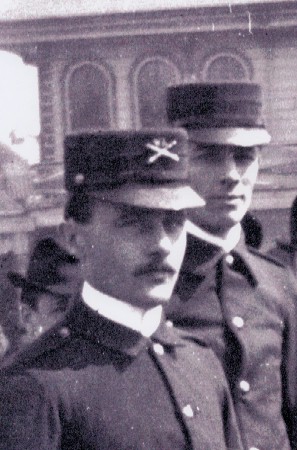
Enlisted man of the Washington Artillery wearing his sack coat
and kepi with WA insignia.
(Above two photos courtesy John M. Fleming Collection)
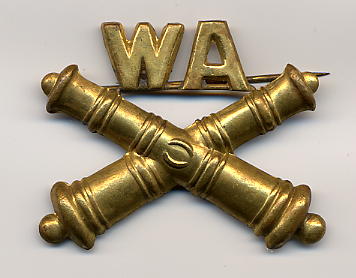
WA kepi insignia
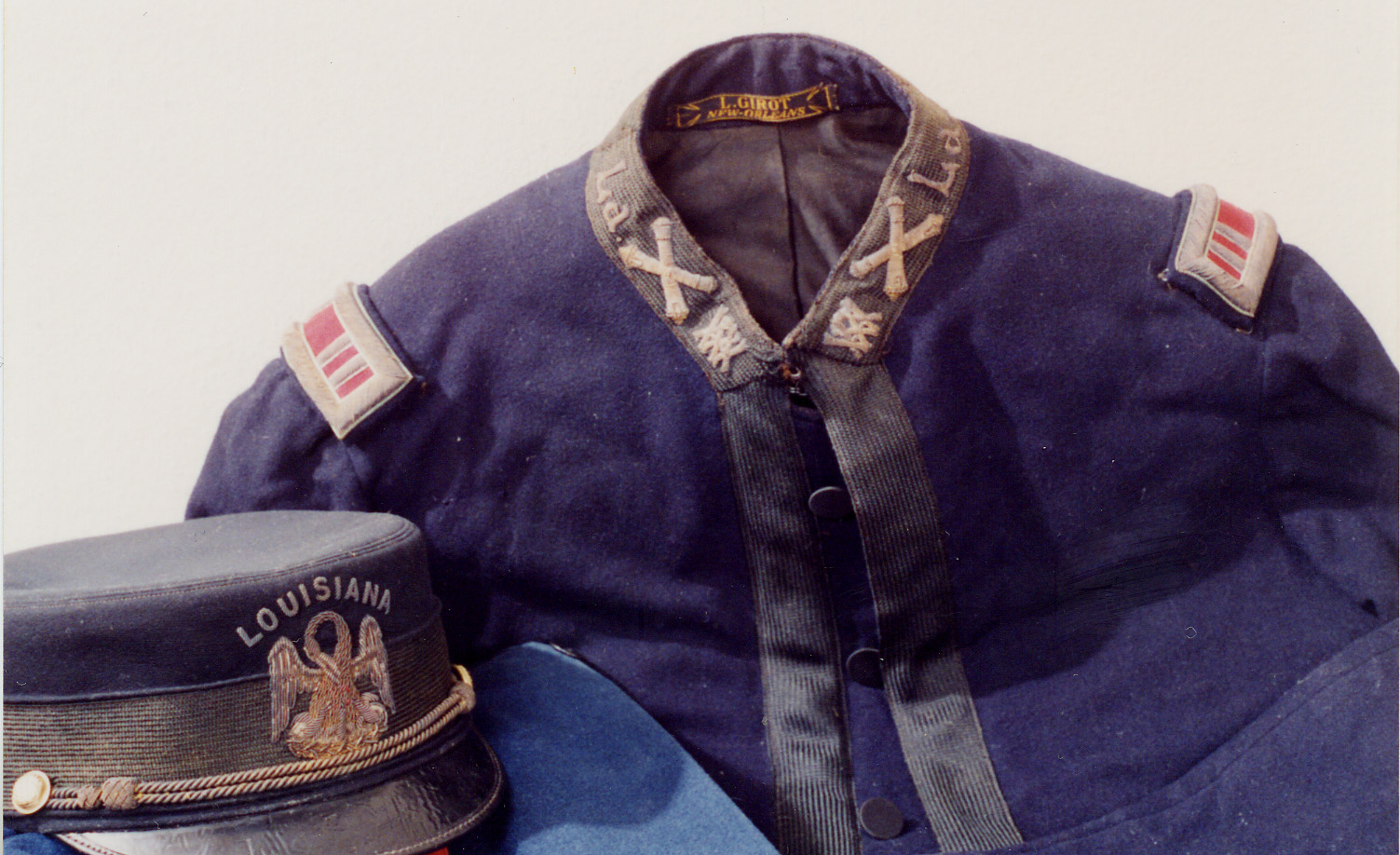
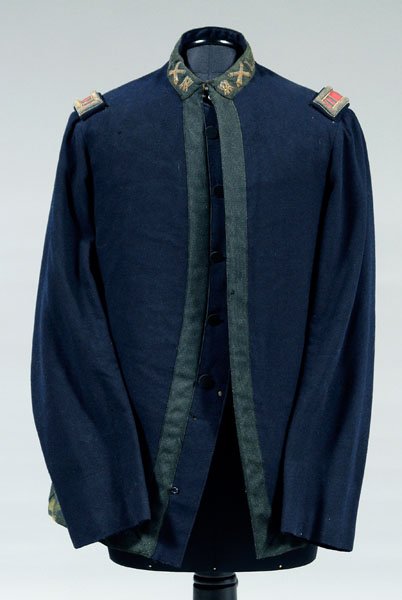
M1898 Undress Uniform of Washington Artillery
worn by officers and enlisted men
Officer's kepi
M1902 uniforms
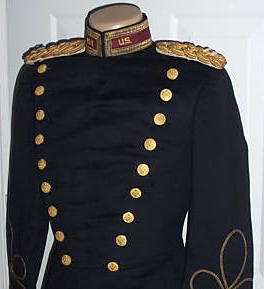
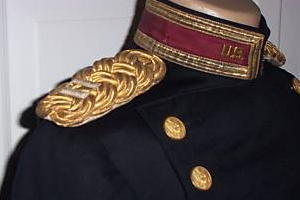
(Officer's dress M1902 uniform)
.jpg)
Colonel Allison Owen of the Washington Artillery,
wearing his M1902 dress uniform
(note WA commander medal)
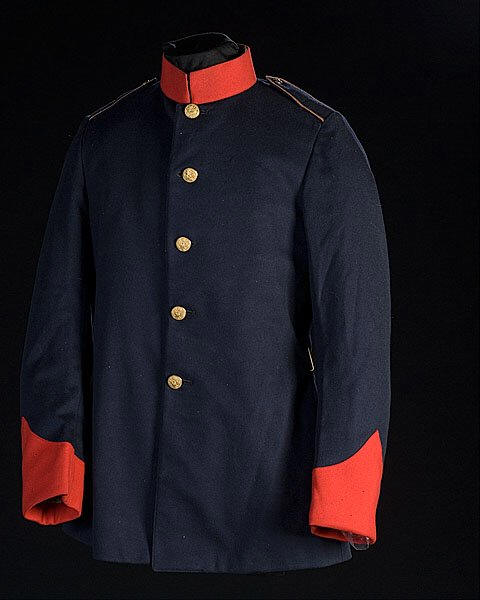
M1902 dress tunic, enlisted man
Mexican Border
(1916)
M1912 Field Uniform
In March 1916 the ongoing
revolution in Mexico spilled over into the United States when Pancho Villa's
guerrillas sacked and burned Columbus, New Mexico. Within days, President
Woodrow Wilson dispatched General John J. Pershing with 10,000 troops on a
Punitive Expedition into Mexico to capture Pancho Villa. Pershing spent ten
months in Mexico tracking Villa, but was never able to find him. In early 1917
Pershing returned home empty-handed. Further attempts to find Villa were
overtaken by American entry into World War I in April of 1917. Three thousand
Army Reserve soldiers supported the Punitive Expedition and the accompanying
National Guard deployment to the border – the first call-up in the Army
Reserve’s history.
The Washington
Artillery was assigned the name the First Battalion, Louisiana Field Artillery
(Washington Artillery) and was part of the 13th Provisional Division when it
arrived at the border on July 18, 1916.
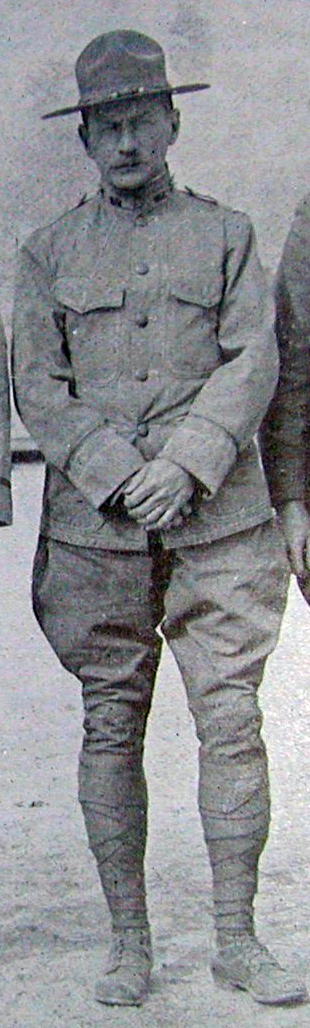
Colonel Allison Owen
of the Washington Artillery, wearing his
M1912 field uniform
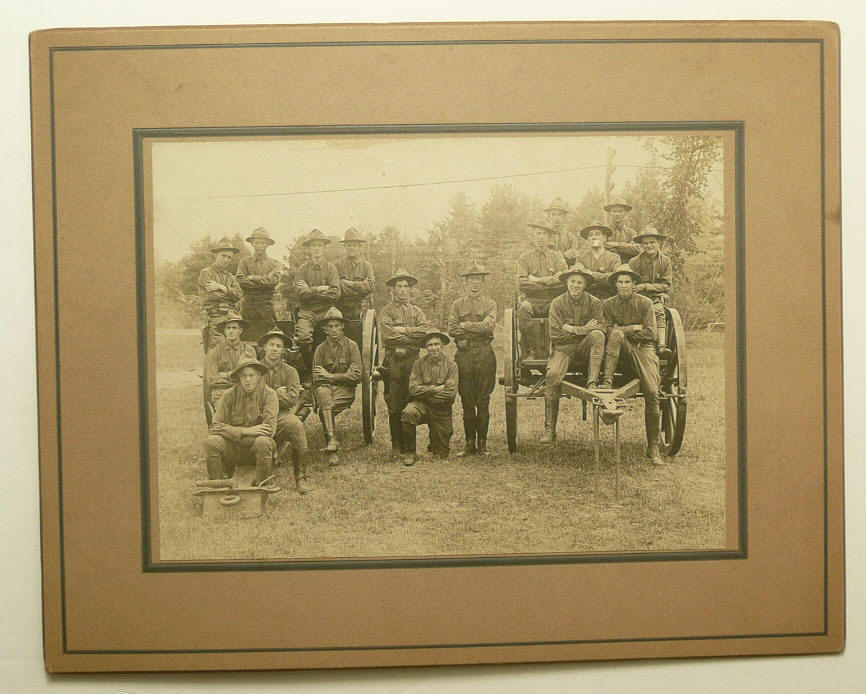
Men of the Washington Artillery, wearing
their M1912 field uniforms
World War I
(1914-1918)
The United States entered
the First World War (1914-1918) on April 6, 1917. The Army set about equipping,
shipping and deploying its largest force since the Civil War to France.
The first U.S. units saw action in late 1917, but most of the American divisions
came to France in 1918. The Washington Artillery continued to use their M1912
field uniforms during this era.
M1912 Field Uniform
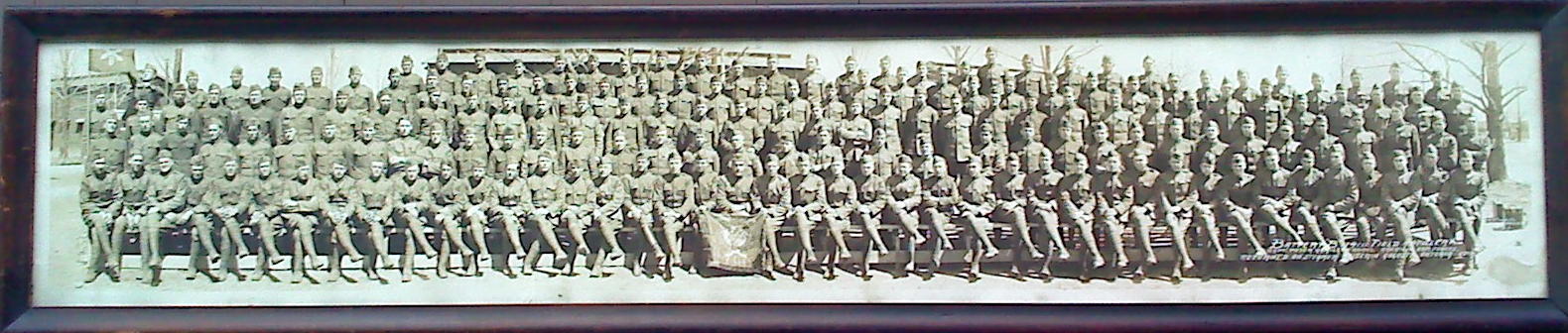
Battery B, 141st Field Artillery upon
arrival to the states from their
WWI expedition
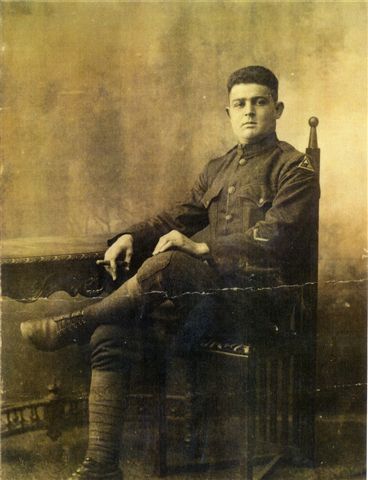
(Photo courtesy Jay Hotard)
Winter (wool) Uniform, Battery B
(with overseas insignia as in above photo-
ribbons for service at Mexican Border and
WWI)
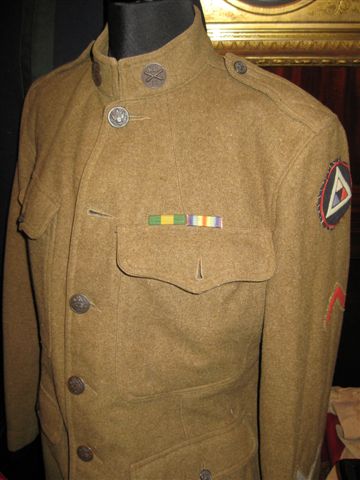
Uniform of Washington Artillerist, Battery B,
WWI era
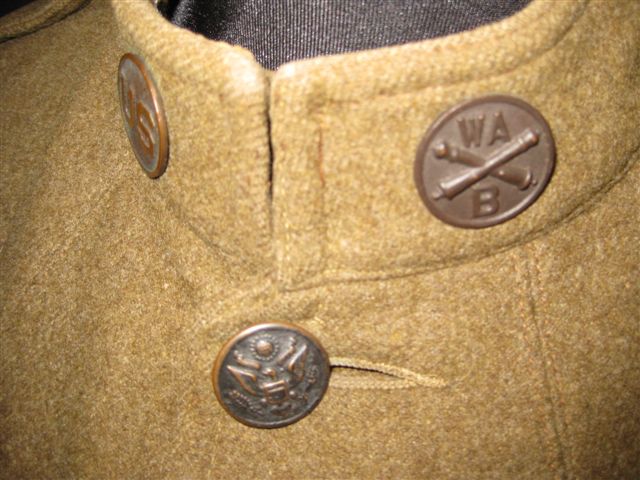
Close-up of WA Battery B collar disc
.jpg)
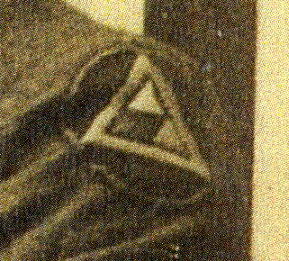
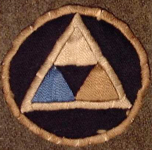
Close-up of 39th Division patch, left
shoulder
.jpg)
39th Division felt sleeve insignia
patch worn by Washington Artillerists in WWI on
their uniforms' left upper arms.
First variation
Silver/White
equilateral triangle (with 3 triangles inside: gold, silver, & blue) within a gold circle on black field.
Second variation
Grey/Silver equilateral triangle (with 3
triangles inside: red, white, & blue)
within a red circle on black field.
Winter Uniform, Battery C
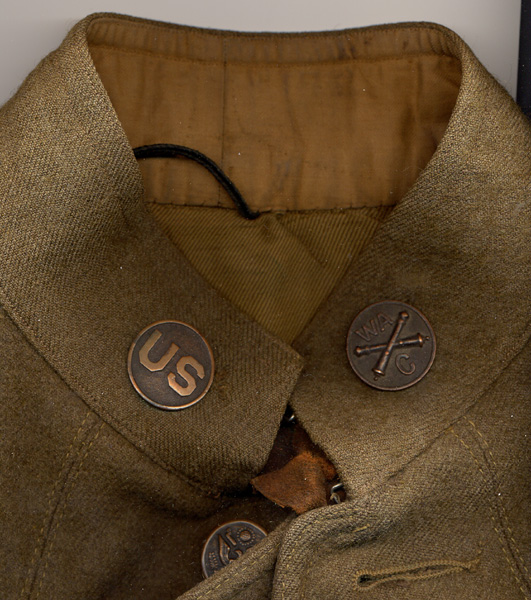
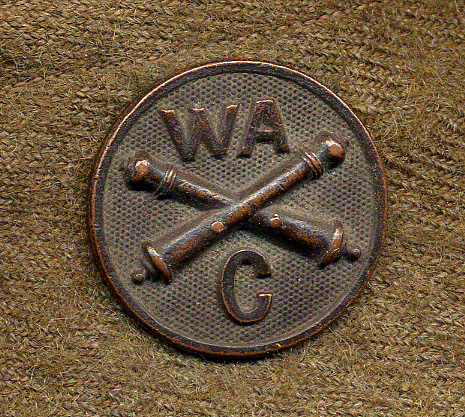
Uniform of Washington Artillerist, Battery C,
WWI era
Winter Uniform, Battery A
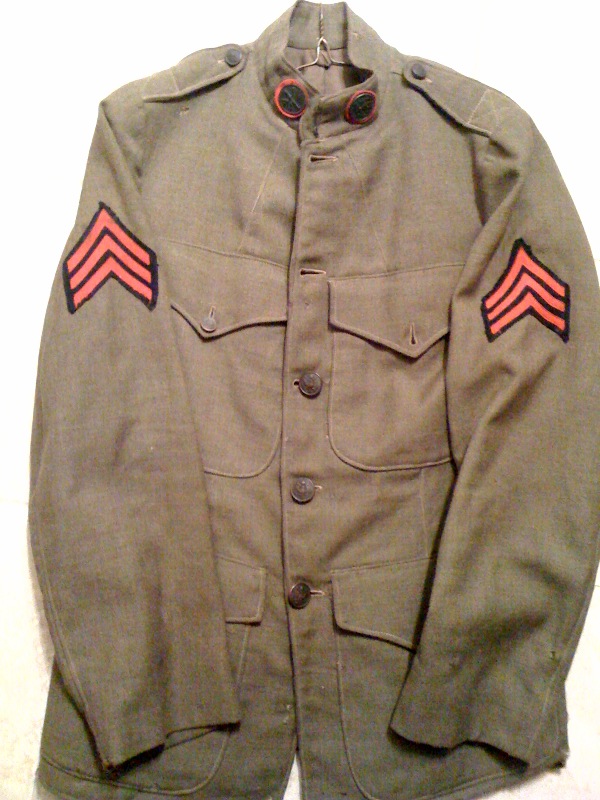

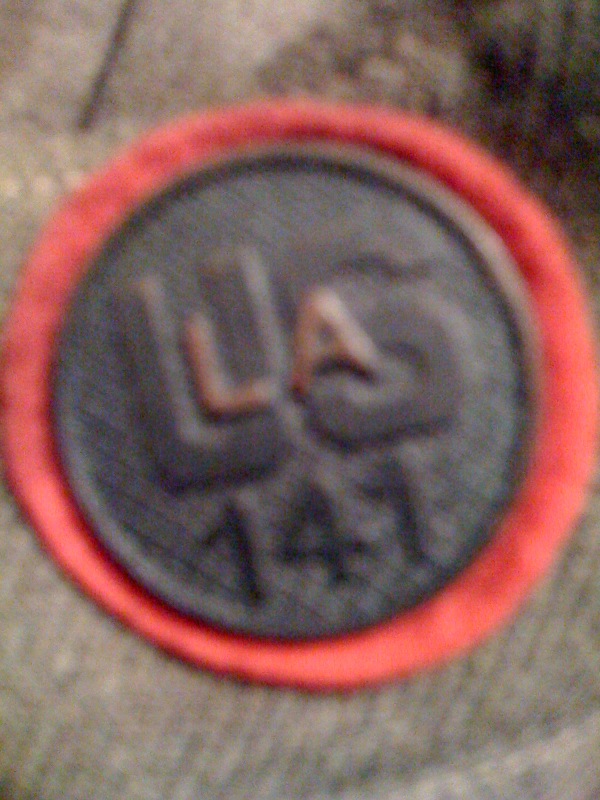
Uniform of Washington Artillerist, Battery A,
post-WWI era (circa 1918-20s)
The
battalion
reorganized after WWI on November 25, 1920
under the
National Defense Act as Battery A, Field Artillery
of the
Louisiana National Guard with Colonel Allison Owen.
(note left collar disc with "LA" on "US"
over 141
and right collar disc "A" under crossed
cannon designating Battery A)
[more photos pending]
World War II
[photos pending]
more to come later.....
HOME